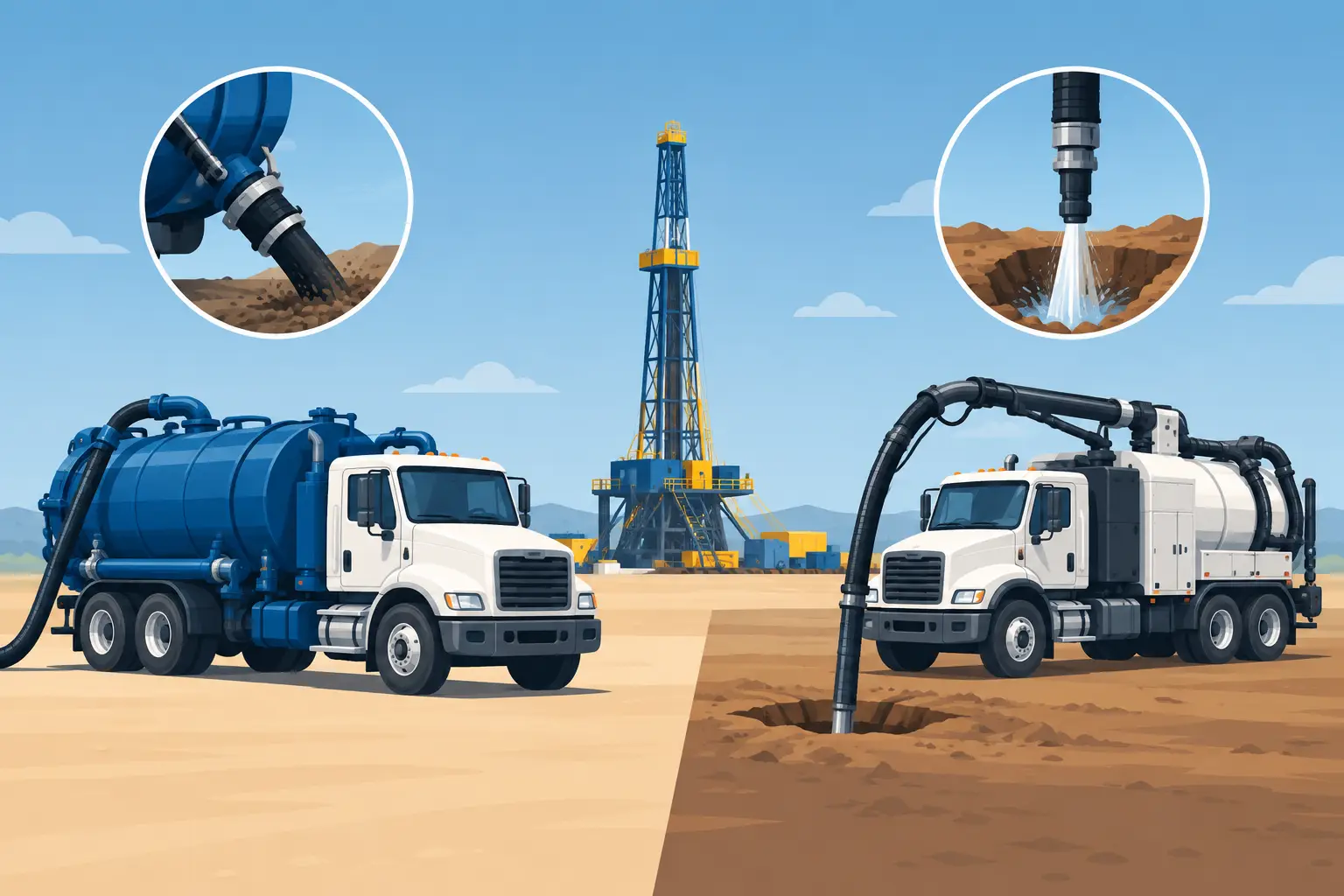
A vacuum truck versus hydrovac decision is not a matter of picking the bigger unit or the closest available truck. It comes down to the material in front of the crew, the work that has to be completed, and what the location needs to look like when the job is done. Dispatch the wrong equipment and a simple task can turn into extra mobilization, delayed work, disposal issues, and unnecessary site disturbance.
For oilfield operations, the distinction matters most when schedules are tight. A vacuum truck is built to recover, contain, and transport fluids and semi-solids. A hydrovac combines pressurized water with vacuum recovery to expose buried utilities, daylight crossings, clean around infrastructure, or excavate with control. Both use vacuum, but they solve different field problems.
Vacuum Truck Versus Hydrovac: The Working Difference
A vacuum truck uses a high-capacity vacuum system and sealed tank to pull material from pits, tanks, separators, cellars, sumps, lines, and containment areas. In oilfield service, that material may be produced water, drilling fluids, residual oil, tank bottoms, wash water, sludge, or other recoverable liquid waste. The objective is removal and controlled transport.
A hydrovac uses a water system, typically with a pressure pump and hose reel, to cut or loosen soil. The vacuum system then lifts the slurry into the debris tank. The objective is controlled excavation. The water breaks ground where a mechanical bucket could damage a buried line, cable, flowline, or facility component.
That distinction affects the entire job plan. If the task is pulling fluid from a 90-110 bbl tank, cleaning a containment area, or removing accumulated liquids before maintenance, a vacuum truck is the practical choice. If the task is locating a buried line before excavation, exposing a crossing, or digging near active infrastructure, hydrovac service is usually the safer and more precise approach.
When a Vacuum Truck Is the Right Call
Vacuum trucks earn their place in routine production support because they move material efficiently without adding water to the system. That matters when fluid volume, disposal planning, and tank capacity drive the job.
On a workover, a vacuum truck can keep the location moving by pulling fluids from the cellar, recovery tanks, or containment before the next operation starts. During facility maintenance, it can remove tank bottoms and wash water, support line cleanout, or recover liquids released during repairs. After a spill response has been contained, the truck can recover standing fluids and help return the location to workable condition.
The key advantage is throughput. When the material is already liquid or pumpable, there is no reason to turn it into slurry first. A properly sized vacuum unit, competent operator, clear disposal plan, and good hose access can make short work of a fluid-handling task that would otherwise hold up a service rig, hot oil unit, or maintenance crew.
Vacuum service also works well where recovery needs to happen without aggressive ground disturbance. Pulling accumulated water from secondary containment or evacuating a vessel does not require excavation. It requires vacuum capacity, controlled transfer, and an operator who understands the job’s fluid stream and site requirements.
There are limits. A standard vacuum truck is not an excavation tool. It may recover loose material, but it cannot reliably cut compacted soil or precisely expose an underground utility without a water system designed for that work. Trying to use suction alone to chase a buried line wastes time and can leave the crew with an incomplete excavation.
When Hydrovac Service Makes More Sense
Hydrovac is built for situations where the ground itself is the obstacle. The pressure water loosens soil in a controlled area, while the vacuum removes the resulting slurry. That gives crews visibility and access without bringing a mechanical excavator directly into the strike zone.
For oilfield work, common hydrovac applications include potholing before trenching, daylighting buried flowlines and electrical runs, exposing wellhead-adjacent infrastructure, locating crossings, cleaning out around foundations, and opening up compacted material where conventional digging carries too much risk. It is particularly useful when drawings are incomplete, old lines may not be where records show them, or multiple utilities converge near a facility.
The benefit is precision, not speed in every circumstance. A trackhoe will move more dirt per hour in open, verified ground. Hydrovac is the better choice when the cost of a utility strike, damaged flowline, or unplanned shutdown outweighs the faster production rate of mechanical excavation.
Ground conditions matter. Clay, frozen soil, shale, and heavily compacted locations can slow hydrovac progress and increase water demand. Cold-weather work may require additional planning for water supply, hose management, freeze protection, and slurry handling. Those are not reasons to avoid hydrovac when the work calls for it. They are reasons to plan the unit, crew, water source, disposal route, and excavation scope before dispatch.
Hydrovac also creates spoil that must be managed. The truck tank will contain a soil-water slurry rather than a recoverable liquid stream. That changes hauling and disposal logistics, especially where produced fluids, hydrocarbons, or other site materials are present. Field supervision should establish material expectations before the truck arrives rather than making a disposal decision after the tank is loaded.
Do Not Let Equipment Overlap Create Confusion
Both units use hoses, vacuum blowers, tanks, and trained operators. From a distance, they can look similar enough to create confusion in a dispatch request. The difference is the supporting systems and operating purpose.
A vacuum truck is configured around efficient recovery and transport. Its performance depends on vacuum strength, tank capacity, hose size, hose reach, access, and the characteristics of the material being recovered. A hydrovac adds a dedicated high-pressure water system for excavation, with the debris tank and water capacity needed to maintain that work.
Some jobs require both capabilities, but not always in one unit. Consider a facility upgrade where a crew must first daylight a buried line, then excavate or make a repair, then recover water and residual fluids from the work area. Hydrovac handles the exposure. A vacuum truck may handle the larger-volume fluid recovery or final cleanup. Planning those moves together avoids idle labor and duplicate mobilization.
The same is true on a well-service location. Before a workover or maintenance operation begins, the crew may need fluid removal, cellar cleanup, or tank support. Once the job is underway, an unexpected buried obstruction or damaged line may require controlled excavation. The equipment requirement changes with the work, and the fastest response comes from a contractor that can coordinate field service, hauling, excavation, and project oversight without making the operator manage several disconnected vendors.
Questions That Set Up the Right Dispatch
Before requesting either unit, the field lead should be able to describe the material, the access, and the end state. The first question is simple: Are you removing fluid, or are you exposing something underground? That answer usually points to the right truck.
The next questions sharpen the scope. What is the estimated volume? Is the material produced water, wash water, sludge, contaminated soil, or a mixed stream? Is there a known disposal path? How far is the hose run from truck parking to the work area? Are there overhead restrictions, soft ground, narrow lease roads, or active operations that limit placement?
For hydrovac work, identify what is believed to be below grade, the depth range, available utility information, required daylighting area, and whether mechanical excavation will follow. For vacuum work, identify tank size, expected solids, suction depth, transfer requirements, and whether the truck needs to remain on site to support an ongoing operation.
A vague request for a “vac truck” can work for a simple cleanup. It is not enough for a time-sensitive project where the wrong truck can hold up the next phase. Clear field information lets the service provider bring the right configuration, crew, hoses, support equipment, and disposal plan on the first mobilization.
Build the Equipment Plan Around the Work
The practical answer to vacuum truck versus hydrovac is straightforward. Choose a vacuum truck when the job is fluid recovery, transport, tank cleaning, or liquid waste handling. Choose hydrovac when the job requires controlled soil removal around buried infrastructure. Use both when the sequence calls for exposure, repair, cleanup, and fluid management.
Darby Energy supports Central Ohio operators with late-model vacuum trucks, oilfield excavation capacity, hauling, and field crews that understand how one activity affects the next. For an active location, provide the material type, volume, access conditions, and required outcome before dispatch. That information puts the right unit at the gate and keeps the job moving.
Leave a Reply