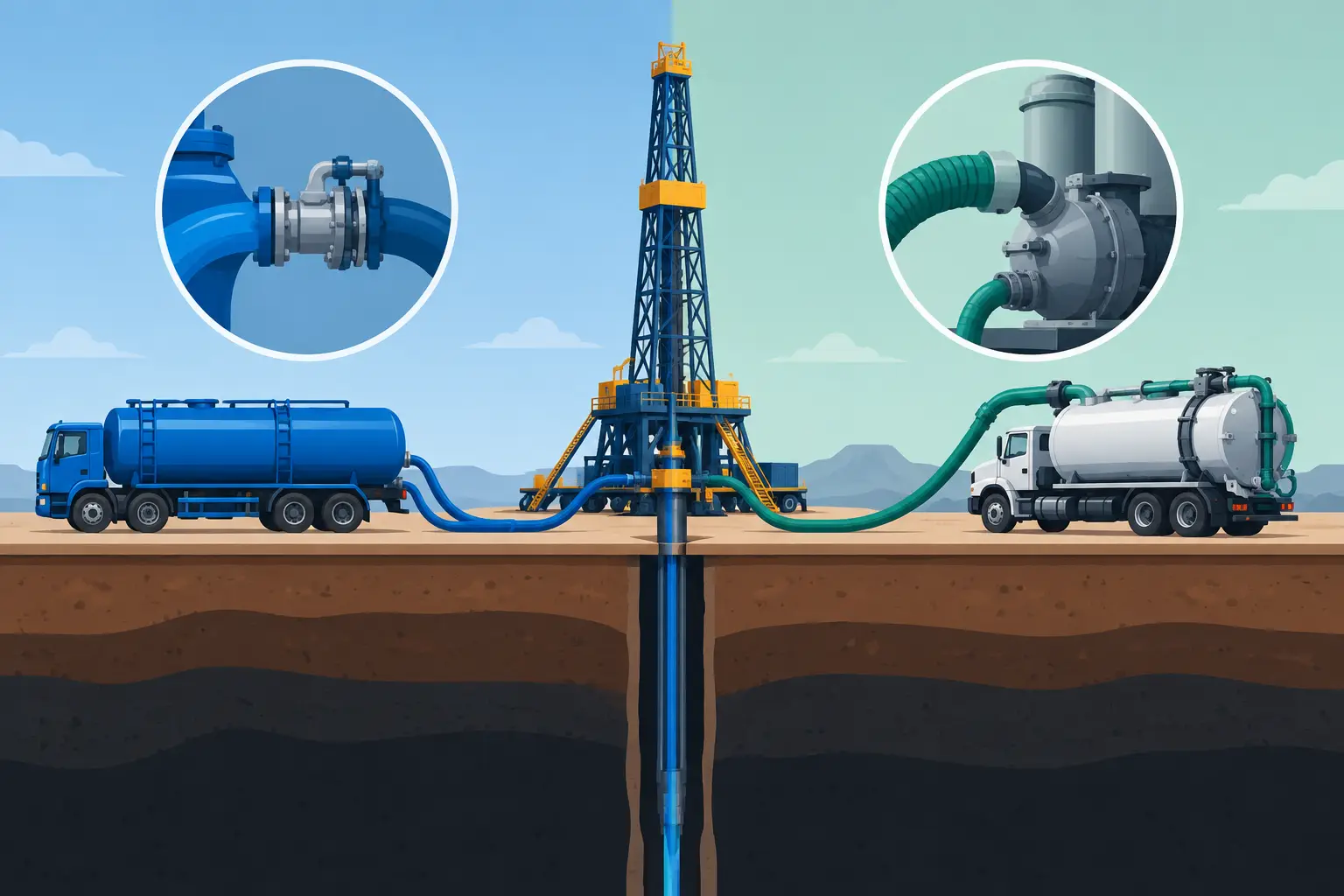
A workover can lose a shift before the first tool goes downhole if fluid handling is treated as an afterthought. The choice between fluid transfer versus vacuum recovery affects truck selection, containment, disposal routing, crew exposure, and how quickly the location can move to the next operation. They are related services, but they are not interchangeable.
Fluid transfer is generally the right call when the material is known, the destination is ready, and the job requires controlled movement from one vessel or location to another. Vacuum recovery is built for removing accumulated liquids, sludge, residual hydrocarbons, and mixed materials when access, condition, or certainty is less favorable. Knowing where one method stops and the other starts keeps a routine production job from becoming a cleanup problem.
What Fluid Transfer Is Designed to Do
Fluid transfer moves a known fluid stream from Point A to Point B using the appropriate pump, hose package, fittings, and containment plan. On a producing location, that may mean moving produced water, brine, completion fluid, oil, or another compatible liquid between tanks, frac tanks, pits, separators, or approved receiving points.
The operating objective is controlled volume movement. The crew needs to know what is being moved, approximate volume, source and destination capacity, transfer rate, line routing, and any pressure limitations. When those items are defined, transfer work can be efficient and predictable.
A transfer setup is often the better option during planned tank changes, fluid staging, well servicing, load-out support, or production maintenance where the fluid is pumpable and the receiving vessel is available. It also allows the field supervisor to manage inventory closely. Metering, tank gauges, observed levels, and transfer rates can be tracked as the job progresses rather than estimated after the fact.
That does not mean transfer work is simple. Hoses must be secured, valves identified, connections checked, and the destination verified before pumping begins. A full receiving tank, a misaligned valve, or an unprotected hose crossing can create the same operational exposure as any other fluid-handling failure.
Where Vacuum Recovery Takes Over
Vacuum recovery removes material rather than merely relocating a clean, defined fluid stream. A vacuum truck is especially useful when the crew is dealing with tank bottoms, separator cleanouts, cellar fluids, spill recovery, accumulated rainwater, oily water, sludge, or material that cannot be reliably handled through a standard transfer pump.
The vacuum system pulls material through the hose into the truck tank, making it well suited to jobs where suction reach and recovery capability matter more than steady transfer rate. It is commonly the practical answer when a vessel needs to be emptied for inspection, repair, hot work preparation, or cleaning.
Material condition drives the decision. Free-flowing water may transfer quickly through a pump, while viscous material, solids, sludge, or variable hydrocarbon content can make vacuum recovery the safer and more dependable choice. The same applies when the bottom of a tank contains residual material that has settled out of the normal production stream.
Vacuum recovery also gives the field team a means to respond when the job is not fully defined at dispatch. If a crew arrives at a location with unknown accumulation in a containment area or needs to recover fluids before excavation, repair, or service-rig work, a properly sized vacuum truck provides flexibility that a transfer-only setup may not.
Fluid Transfer Versus Vacuum Recovery on a Workover
During completions and workover activity, the distinction becomes more important because several crews and pieces of equipment may be working on a tight schedule. A planned fluid move can support the rig, clear tank capacity, or stage material for the next step. Recovery work may be needed to clean the cellar, empty a vessel, remove residuals ahead of maintenance, or restore the location after the operation.
Use fluid transfer when the material is known and the job is primarily about volume management. Use vacuum recovery when the material must be removed from a vessel or area, when it includes solids or sludge, or when the source condition creates uncertainty.
There are jobs where both are needed. A crew may transfer usable or designated fluid from a tank first, then bring in vacuum capacity to pull the remaining bottoms and clean the vessel. This approach preserves the efficiency of pumping bulk volume while using vacuum equipment for the final recovery work that transfer pumps may leave behind.
Trying to force one method onto the entire job can slow the location down. A vacuum truck used for a long, clean transfer may not be the most efficient solution. Conversely, relying on a transfer pump to clean out a tank with settled material can leave residuals, plug equipment, or require a second mobilization.
The Factors That Should Drive the Decision
The right method starts with the material itself. Operators should identify the fluid type, viscosity, temperature, expected solids, hydrocarbon content, and whether the material has been sitting long enough for sediment to settle. A hot, light fluid behaves differently than cold tank bottoms. Produced water with minor suspended solids is different from heavy sludge or an unknown mix recovered from containment.
Source and destination conditions matter just as much. A fluid transfer needs reliable access to both ends of the move and enough verified capacity at the receiving point. Vacuum recovery requires truck access, hose reach, safe positioning, and sufficient onboard tank capacity. A 90-110 bbl vacuum truck may be well suited for recovery volume, but the hauling and disposal plan still has to match the total barrels expected.
Schedule also matters. If a service rig is waiting on a cleared work area, rapid vacuum recovery may be the best way to get the operation moving. If the work is scheduled and fluid volumes are known days ahead, a coordinated transfer plan may reduce truck cycling and avoid unnecessary standby time.
Do not separate fluid handling from the rest of the location plan. Site access, weather, containment condition, traffic flow, tank layout, and disposal requirements all affect whether the chosen equipment can work safely and without interruptions. In Central Ohio, soft ground, narrow lease roads, and changing site conditions can turn an otherwise straightforward fluid job into a logistics issue.
Planning the Job Before Equipment Rolls
Good fluid handling begins with a field-ready scope, not a vague request for a truck. The dispatcher and supervisor should have the source location, material description, estimated barrels, destination or disposal route, available access, and the required completion time. If tank cleaning is involved, the scope should also state whether the vessel needs a basic pump-out, bottom recovery, steam cleaning, or preparation for inspection or repair.
Clear communication prevents unnecessary mobilizations. For example, a request to “empty a tank” may involve a clean transfer to another tank, a vacuum recovery of residuals, or a combined operation followed by cleaning. Those are different equipment and crew requirements.
The location should be prepared before the unit arrives. Confirm gates and roads are passable, identify the work zone, establish hose routing, verify containment, and make sure the responsible site representative is available to direct the crew. This is especially important when recovery work is being performed around active production equipment or concurrent construction activity.
Equipment Readiness Is Part of the Service
A capable contractor brings more than a truck. The job requires operators who can assess the material and location conditions, equipment matched to the work, and coordination with the workover, production, excavation, or hauling schedule. A late-model vacuum truck, properly maintained hoses, appropriate fittings, and a crew familiar with oilfield fluid-handling procedures reduce the chance that a small issue becomes a shutdown.
For integrated projects, one provider can also coordinate the follow-on work. Recovery may need to happen before excavation, a tank move, steam cleaning, hot oiling, or service-rig activity. Darby Energy supports those connected operations with vacuum truck services, workover capability, hauling, and field support so the site does not have to manage a string of disconnected vendors.
The practical question is not which method is better in every case. It is whether the fluid is being moved, removed, or both. Define the material, verify the barrels and destination, and match the equipment to the actual condition at the location. That decision protects the schedule long before the truck backs through the gate.
Leave a Reply