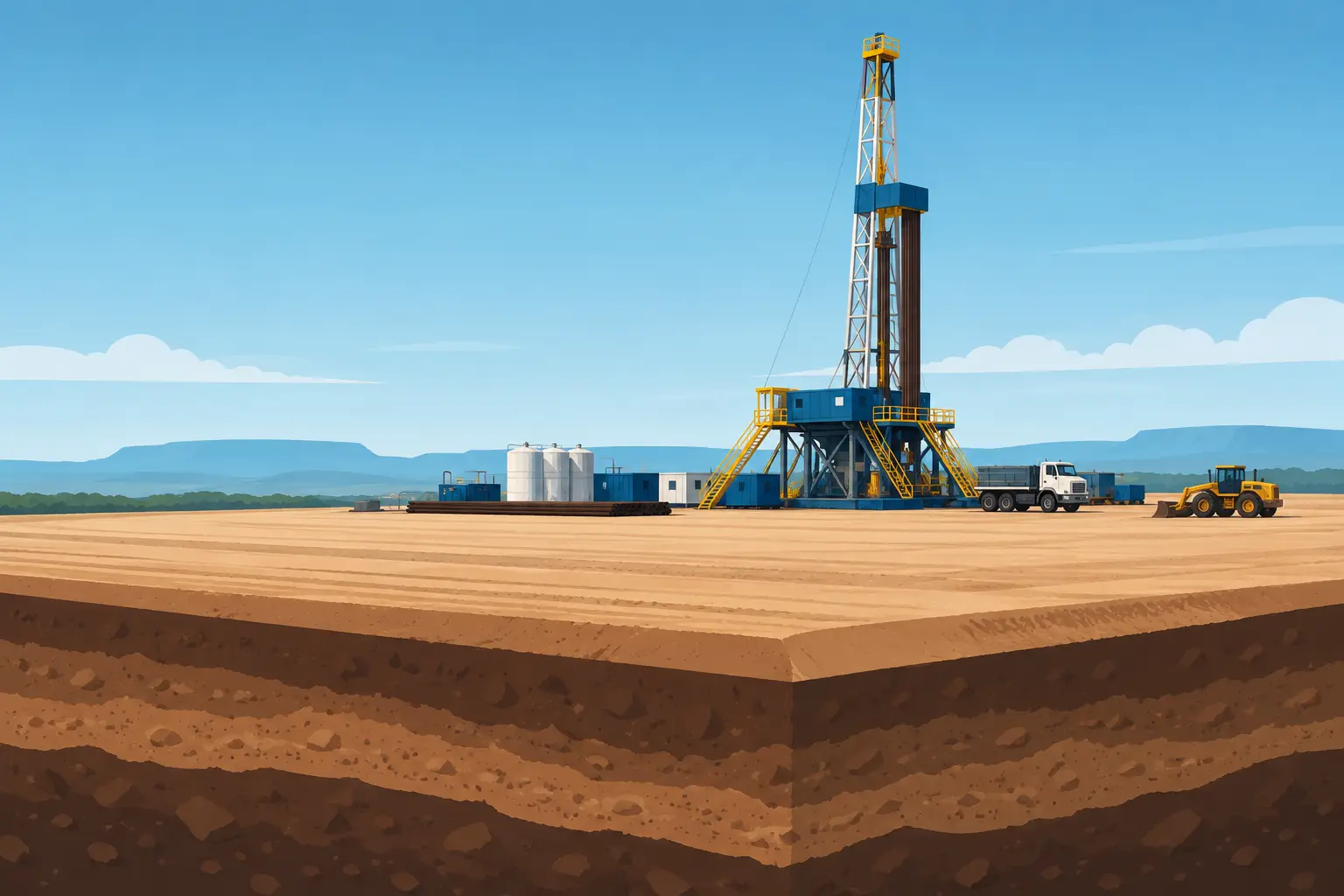
A pad can look finished from the lease road and still fail the first time loaded equipment, rainwater, and production traffic hit it. The best oilfield grading is not simply moving dirt until a location appears level. It is building stable access, controlled drainage, workable elevations, and dependable subgrade conditions for the full life of the well.
For operators and field superintendents, grading decisions show up later as downtime, stuck trucks, standing water, damaged tanks, soft shoulders, and emergency repair costs. The right earthwork plan accounts for what is arriving on site, where it must operate, and how water will leave the location when field conditions turn.
Best Oilfield Grading Begins With the Work Plan
A grading contractor needs more than a pad outline. The crew needs to understand whether the location is supporting drilling, completions and workover, production equipment installation, a tank battery expansion, or a maintenance project. Each phase puts different loads and traffic patterns on the site.
A drilling or completion location may need wide, stable travel lanes for heavy hauling, float access, cranes, service equipment, and fluid handling. A production site may require tighter grading around separators, tanks, loadout areas, and access to valves or wellheads. A workover location needs enough bearing capacity and clean working room for the service rig, support trucks, and the equipment needed to keep the job moving.
Grade elevations should be established with the next operation in mind. A pad that is flat enough for initial construction but poorly positioned for drainage can create trouble for years. A pad that slopes too aggressively may complicate equipment setup. A pad that is too tight may force trucks into weak edges and create avoidable safety exposure.
Before excavation starts, the operator, construction lead, and grading crew should be aligned on traffic routes, equipment footprints, anticipated load weights, drainage outlets, lease road tie-ins, and final site elevations. This is where experienced field coordination earns its value. Rework is expensive once rig mats, tanks, or a service unit are already on location.
Access Roads Carry the Schedule
A location is only as usable as the road leading to it. Lease-road construction and repair deserve the same attention as the pad because every mobilization depends on them. Haul trucks, vacuum trucks, winch trucks, Rolling Tailboard Float loads, and service equipment need adequate width, turning radius, stable shoulders, and a road base that holds through changing weather.
The right road section depends on soil conditions, grades, expected axle loads, drainage, and traffic frequency. There is no single rock depth or road profile that fits every Ohio location. Soft subgrade may need undercutting, separation fabric, stabilization, or additional aggregate. A road built for occasional pickup traffic is not automatically ready for repeated heavy loads.
Crowning and ditching matter as much as aggregate. Water trapped on the road surface breaks down base material and pumps fines into the stone. Water flowing unchecked across the road can cut ruts, wash shoulders away, and leave a route impassable when a crew needs to respond. The objective is straightforward: keep water moving off the running surface and keep loaded equipment on firm ground.
Drainage Is Part of Pad Construction
Standing water is rarely just a housekeeping problem. It affects pad strength, access, equipment stability, erosion control, and the ability to safely work around tanks and well equipment. Effective grading directs runoff away from the pad, access road, and operational areas without creating erosion downstream or sending water where it does not belong.
That typically means building positive drainage through planned slopes, swales, ditches, culverts, and stabilized outlets where needed. The details depend on topography, existing drainage patterns, soil type, site layout, and permit requirements. A low corner on a pad may look minor during dry construction, then become the collection point for every rain event.
Drainage also needs to remain functional after site activity begins. Tank installations, berm work, line crossings, and repeated truck traffic can change flow paths. Crews should inspect drainage features during construction and again after heavy operations have used the location. Prompt touch-up grading is often far less costly than repairing a washed-out road or rebuilding a saturated work area.
Cut, Fill, and Compaction Cannot Be Assumed
A balanced cut-and-fill plan can control imported material costs, but balance is not the only goal. Material quality matters. Unsuitable fill, organics, wet clay, or poorly compacted lifts can create settlement and soft spots below critical equipment areas.
Where grades require fill, placement should be controlled in workable lifts and compacted to the site requirement. Where weak material is encountered, the crew may need to undercut and replace it rather than bury the issue below stone. The decision depends on the depth and extent of the problem, the planned load, and the operational consequence of failure.
Proof-rolling or similar field verification can help identify weak areas before equipment mobilizes. It is a practical check, not an academic exercise. If a loaded truck finds a soft spot after the location is active, the repair becomes slower, riskier, and more disruptive.
Build the Pad for Real Equipment
The best oilfield grading reflects actual dimensions, not assumptions. Service rigs, workover support equipment, vacuum units, hot oilers, steamer units, fluid tanks, and heavy-haul trailers all need clear routes and stable setup areas. The pad must allow equipment to enter, position, work, and exit without relying on unprepared ground.
For a workover or maintenance project, consider where the service rig will spot, where the winch truck will stage, where 90-110bbl vacuum trucks can safely maneuver, and how fluids will be handled. For construction or production upgrades, consider float access, delivery routes, crane setup, and whether equipment can be placed without blocking the only way off location.
Edges are especially important. Operators often need every usable foot of pad area, but an edge that is too steep, too soft, or too close to a ditch gives drivers little margin. Well-built transitions between the road and pad reduce hang-ups and prevent loaded units from tracking into weak shoulders.
This is also why oilfield excavation works best when it is coordinated with hauling and field services. A contractor that understands the equipment sequence can build around the operation instead of treating grading as an isolated early-phase task.
Inspect Before the Next Mobilization
Grading is not finished when the dozer leaves. Weather, traffic, settlement, and ongoing construction can change a location quickly. A short inspection before the next major mobilization can prevent a long delay later.
Check the running surface for rutting, potholes, and loose aggregate. Walk drainage paths for blocked culverts, erosion, and low areas holding water. Verify that pad edges remain stable and that access routes are clear for the largest planned load. If site conditions have changed since the original plan, adjust before a rig, tank, or heavy-haul load is committed to the road.
The same approach applies after a major rain event. Waiting until a truck is stuck to identify drainage or base failures puts the field crew in a recovery job rather than a production job.
Choose a Contractor That Can Support the Full Scope
Oilfield grading is most effective when the contractor can respond beyond the first cut and final trim. Projects change. A road may need repair before a float delivery, a pad may need widened for a workover unit, or a drainage issue may surface after equipment is in place.
Look for a field partner with excavation capability, experienced operators, heavy-haul coordination, and a practical understanding of well service requirements. Darby Energy brings those functions together for operators that need site development, equipment movement, fluid handling, and field support coordinated around the actual job.
Good grading gives every crew that follows a safer, firmer place to work. Build the access and pad for the loads, water, and operating sequence the location will actually see, and the site will keep working when the schedule matters most.
Leave a Reply