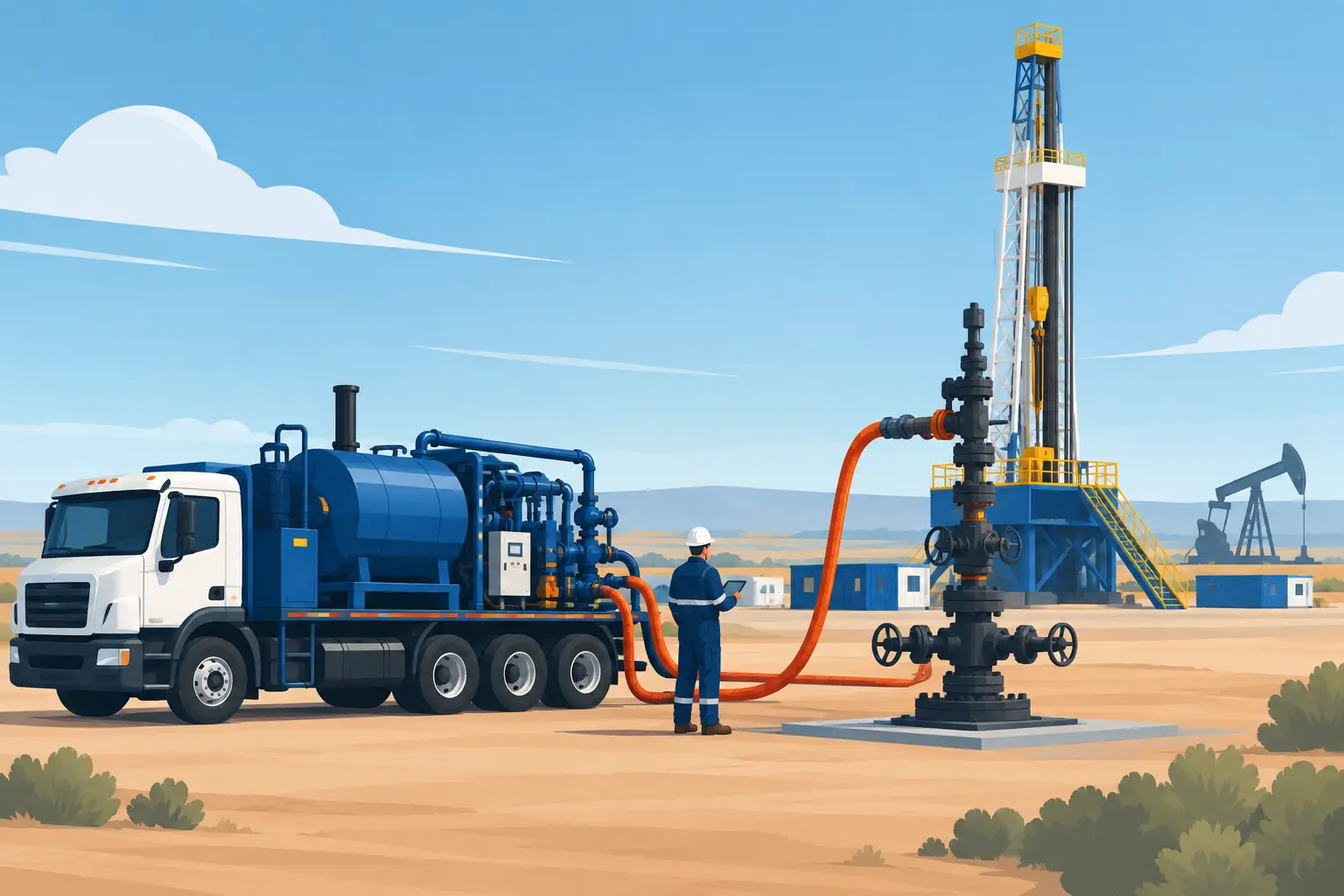
A well can be mechanically sound and still lose production to a restriction in the flow path. What is hot oiling? It is a controlled well-maintenance operation that circulates heated oil through production equipment to melt and move paraffin, wax, and other temperature-sensitive deposits that restrict flow.
For operators, hot oiling is not a generic cleanup service. It is a targeted response to a known production problem, commonly involving wax accumulation in tubing, flowlines, valves, tanks, and surface equipment. When planned correctly, the job restores access through the affected system without introducing avoidable fluid-handling, pressure-control, or equipment risks.
What Is Hot Oiling Used For?
Hot oiling uses a dedicated hot oiler unit with heated fluid capacity, pumps, burner equipment, hose reels, and the controls needed to circulate fluid through the designated path. The crew heats compatible oil, then pumps it through tubing, flowlines, or surface piping to transfer heat into deposited material.
As paraffin softens or melts, the circulation process carries it toward the selected return point for containment and handling. The goal is not simply to apply heat. The job must establish a workable circulation route, maintain appropriate rates and pressures, and recover displaced fluids without creating a new restriction farther downstream.
Common hot oiling applications include cleaning waxed flowlines, treating tubing restrictions, restoring movement through valves and surface piping, and supporting tank, separator, and production-equipment maintenance. It can also be used ahead of a workover when deposits may interfere with servicing operations.
The right application depends on the restriction. A flowline that has gradually lost capacity due to paraffin requires a different plan than a tubing issue, a frozen valve, or a system with scale, sand, or mechanical damage. Heat may help with wax. It will not repair collapsed tubing, replace failed equipment, or solve every cause of declining production.
How a Hot Oiling Job Works in the Field
A productive hot oiling operation starts with job information, not burner ignition. The crew needs to understand the equipment configuration, the suspected restriction, available connection points, fluid destination, working pressures, and the operating status of the well. That information determines whether circulation can be established and where the returns need to go.
The hot oiler is then positioned for safe access to the well or production equipment. Hoses, fittings, valves, and containment are set up for the selected circulation path. Depending on the job, returns may be directed to a production tank, frac tank, vacuum truck, or another approved containment point.
Once the system is lined up, heated oil is circulated at a controlled rate. Crew members monitor temperature, pressure response, pump performance, return volume, and the material coming back through the system. A pressure change can indicate that deposits are moving, but it can also signal a closed valve, a blocked route, or a developing issue that requires the operation to stop and be reassessed.
After circulation, the crew flushes or displaces the system as needed, secures the equipment, and confirms that the intended flow path is open. Production response may be immediate, or it may require observation after the well is returned to normal operating conditions. The condition of the recovered fluid often provides useful information for the next maintenance decision.
Temperature and Pressure Are Job-Critical Variables
Hot oiling is not a matter of heating fluid as much as possible. Excessive temperature can damage elastomers, seals, coatings, and other temperature-sensitive components. It can also create avoidable operational risk in tanks, vessels, and confined piping systems.
Pressure management matters just as much. The crew must stay within the limits of the connected equipment while moving enough fluid to transfer heat and carry softened deposits to the return point. That balance is why hot oiling requires experienced operators who understand both the truck and the wellsite system.
Fluid selection also matters. The circulated oil must be compatible with the production stream and the facility plan for handling returns. A poorly planned job can create emulsions, overload available storage, or leave mobilized wax in an area that is harder to clean later.
Hot Oiling vs. Steam Cleaning
Hot oiling and steam cleaning are often scheduled around the same maintenance window, but they serve different purposes. Hot oiling circulates heated oil through a production path to address internal wax and paraffin restrictions. Steam cleaning applies heat and water vapor primarily to external equipment, tank surfaces, fittings, tools, and areas requiring washdown.
Steam may be the better choice for cleaning exterior buildup or preparing equipment for inspection and repair. Hot oil is generally the field method when the issue is inside a flowline, tubing string, or other production conduit where compatible circulating fluid is required.
In some cases, both services support the same job. A workover or equipment changeout may require hot oiling to clear a restricted line and steam cleaning to prepare tanks or components for safe handling. The key is matching the service to the actual maintenance objective rather than treating all buildup as the same problem.
When Hot Oiling Makes Sense
Hot oiling is most effective when operating history and field conditions point to wax deposition. Warning signs include falling production with no clear mechanical explanation, increasing line pressure, reduced flow through a known wax-prone route, cold-weather flow issues, and repeated restrictions at the same point in the system.
The timing can be reactive or preventive. A reactive job addresses an active restriction that is already reducing production. Preventive hot oiling follows a schedule based on crude characteristics, seasonal conditions, flowline exposure, production trends, and prior treatment history.
Neither approach is automatically better. A fixed schedule can prevent downtime, but unnecessary treatments add cost, truck time, fluid handling, and potential wear on equipment. Waiting until a line is fully restricted may cost more in lost production and emergency mobilization. The practical choice is based on the well’s behavior and the consequences of interruption.
Limits and Trade-Offs to Consider
Hot oiling is a useful maintenance tool, but it is not a permanent cure for paraffin-prone production. If the underlying conditions remain unchanged, wax can redeposit after the treatment. Some wells need a recurring program, while others may benefit more from chemical treatment, insulation, flowline changes, mechanical scraping, or a workover-based solution.
There is also a risk of moving deposits without fully removing them. Wax that is softened in one section of line can cool and settle farther downstream if circulation, return handling, or cleanup is not properly planned. For that reason, the return path deserves as much attention as the injection path.
Job planning should also account for tank capacity, produced-fluid handling, access conditions, weather, and coordination with the operator’s production schedule. A hot oiler may be only one piece of the work scope. Vacuum truck support, service-rig work, excavation, hauling, or engineering input may be needed before the system can be returned to reliable operation.
Selecting a Hot Oiling Contractor
The right contractor brings more than a truck and burner. Look for an operator that can assess the circulation route, communicate clearly with the field representative, mobilize equipment suited to the job, and work within the site’s pressure-control and fluid-handling plan.
Equipment condition and crew experience both matter. A dependable hot oiler needs reliable pumping capacity, sound hose and fitting integrity, accurate monitoring, and an operator who can recognize when pressure, temperature, or returns do not match the expected response. On an active wellsite, the ability to coordinate with vacuum trucks, service rigs, and hauling equipment can reduce delays and eliminate unnecessary handoffs.
Darby Energy supports hot oiling as part of a broader field-service capability, allowing operators to coordinate well maintenance, fluid handling, workover support, site work, and transportation through one operational partner when the scope demands it.
The best hot oiling jobs are the ones that restore a clear flow path, manage every barrel moved, and leave the wellsite ready for the next phase of work. When production behavior changes, treating the restriction early and with the right field plan can keep a manageable maintenance issue from becoming a larger operational interruption.
Leave a Reply