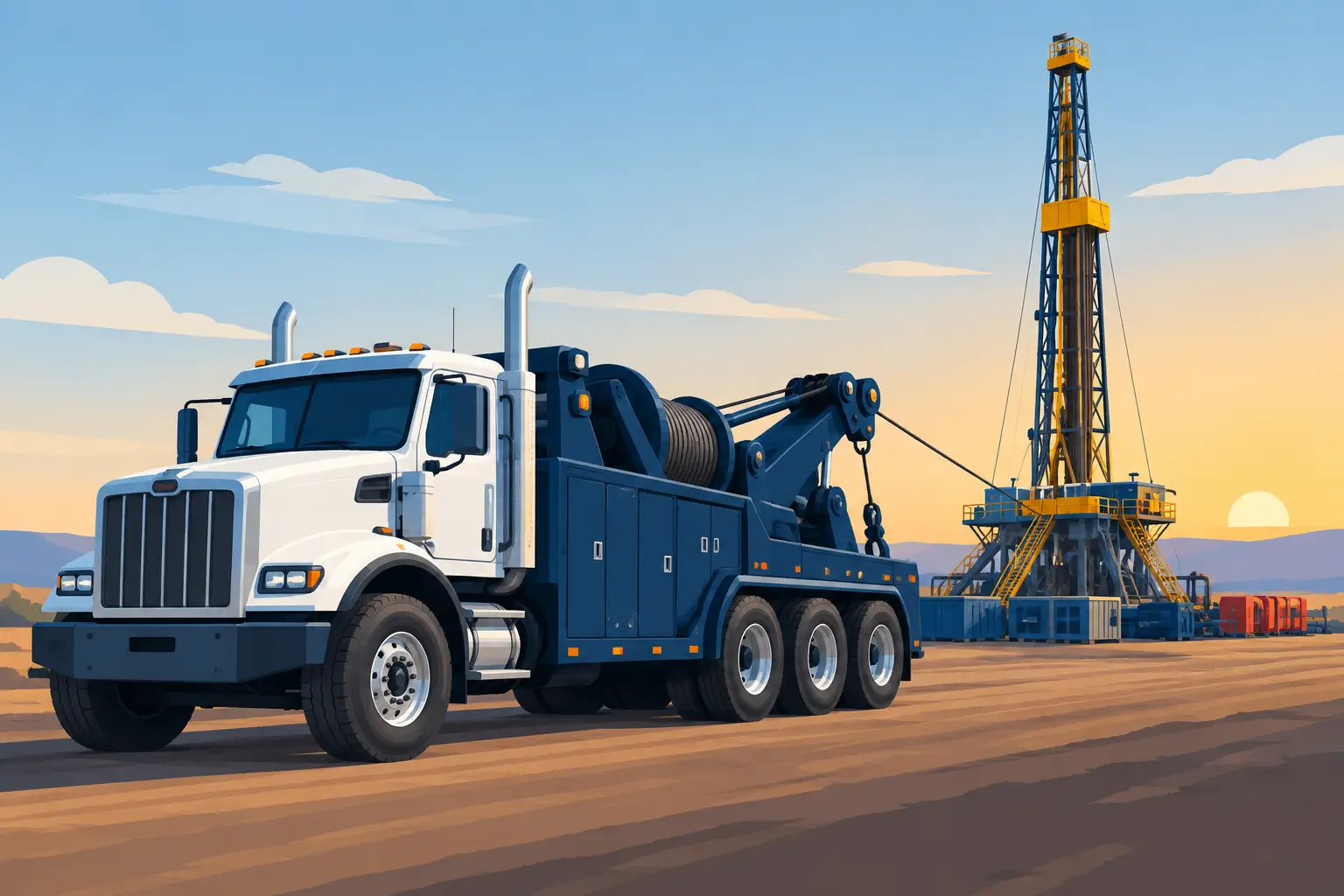
A rig move rarely waits for ideal ground conditions, open access, or a clean calendar. Winch trucks give field teams a controlled way to load, secure, transport, and position equipment when a standard tractor-trailer arrangement is not the right answer. For well service, production support, and construction activity, the truck, winch, trailer, and operator have to work as one system.
The value is not simply pulling a load onto a trailer. It is keeping the move moving without creating unnecessary handling steps, damaging equipment, blocking the lease road, or leaving critical assets stranded between locations. When the job calls for a rig component, tank, skid, pipe rack, compressor package, or support equipment to be relocated, proper winch-truck support protects both the schedule and the equipment.
What Winch Trucks Handle in the Field
A winch truck is built for controlled loading and recovery of heavy equipment. It typically works with a lowboy, float, or other specialized trailer configuration, using a hydraulic winch system to pull equipment onto the deck and maintain control throughout loading and unloading. That capability matters when equipment is not self-propelled, access is tight, or the load cannot be handled efficiently by conventional ramps alone.
In oilfield work, hauling needs change quickly. A completion may require support equipment moved between pads. A workover crew may need service-rig components or production equipment repositioned. Tank batteries, separators, pumps, light plants, tool trailers, and construction machinery may all require different approaches based on dimensions, weight, center of gravity, ground conditions, and the available loading area.
The trailer matters as much as the truck. A Rolling Tailboard Float, for example, provides a practical loading approach for equipment that needs a gradual transition to the deck. The right configuration reduces loading angle, keeps the operation controlled, and helps crews avoid improvised solutions that cost time or introduce risk.
The Difference Between a Haul and a Managed Move
A truck can transport a load. A managed move begins before the truck reaches the location.
Field supervisors need to know whether the access road will support the axle loading, whether a turn can be made at the entrance, and whether the destination has room for the truck and trailer to position safely. They also need a realistic plan for loading and unloading. Equipment that appears straightforward on a dispatch sheet may have damaged tires, no brakes, limited lifting points, or a configuration that changes the load balance.
That is why experienced operators assess the load and route rather than treating every move alike. They account for tie-down points, deck placement, chain and binder requirements, height restrictions, overhead obstructions, weather, and the sequence of equipment leaving or entering the site. A move that is planned around the actual conditions on location is less likely to interrupt the next crew waiting on that equipment.
There is also a coordination issue. Heavy hauling often occurs alongside excavation, site preparation, fluid handling, well service, and maintenance activity. The truck needs a clear path, but it also needs to fit into the job sequence. Sending equipment too early can crowd a location. Sending it too late can hold up a rig, a crane, or a completion spread.
When a Winch Truck Is the Right Choice
Winch truck service is especially useful when equipment cannot simply drive onto a trailer or when controlled pulling is needed. It is often the right fit for disabled or non-running equipment, oilfield skids, support units, machinery with limited clearance, and rig-related loads that require careful deck placement.
It also provides an advantage on active locations where space is limited. A crew may not have room for a separate loading machine, or the ground may not support repeated handling with multiple pieces of equipment. A properly matched winch truck and trailer can consolidate the loading and transport function, reducing the number of moving parts on the job.
That does not mean a winch truck is the answer for every load. Some equipment requires crane assistance, escort planning, permits, or a different trailer type. Extremely heavy, oversized, or unusually shaped loads may require a specialized haul plan. The practical question is not whether a winch truck can pull the load. It is whether the complete truck-and-trailer configuration can handle it safely, legally, and efficiently from the origin to the final set point.
Conditions That Change the Haul Plan
Site conditions can change the entire approach. Soft shoulders, wet lease roads, steep grades, narrow gates, and limited turnaround space all affect truck positioning and trailer selection. In Central Ohio, seasonal weather can turn a routine access road into a traction and ground-pressure problem quickly.
Load condition matters too. A skid with a sound structural frame and accessible pull point is different from a unit that has sat in place for years. Before loading, crews should identify loose components, damaged steel, unsecured doors, hoses, piping, and anything that could shift during transport. Addressing those issues at the origin is far better than discovering them after the load is on the road.
Planning the Move Before Dispatch
The fastest response is usually the one that starts with accurate information. A dispatcher or hauling coordinator needs more than a general description such as “move a tank” or “pick up rig equipment.” Dimensions, estimated weight, equipment type, current condition, pickup location, destination, and required delivery timing all affect the equipment assignment.
Photos are often useful, particularly when the equipment has unusual attachments, restricted access, or uncertain loading points. A simple site sketch can help identify gate width, road approach, and where the truck can turn around. If the load is already on a pad with other active equipment, the field superintendent should establish a clear loading window and designate who will direct site traffic.
Permitting and route considerations should be handled before the truck is loaded. Height, width, gross weight, axle distribution, bridge restrictions, and local travel limitations are not paperwork details to be sorted out later. They determine whether the planned move is viable. A short route can still be the wrong route if it creates clearance issues or puts the truck onto an unsuitable road.
Loading Control Protects the Schedule
Loading is the point where small mistakes become expensive delays. The truck must be positioned on stable ground, the trailer must be aligned with the equipment, and the winch line must pull from the correct angle. Crews need a clear signal person and a defined exclusion zone while the load is moving.
Once on deck, the equipment must be secured for the conditions it will actually encounter. That includes braking, turning, uneven surfaces, and route vibration, not just the first few miles from the lease. Proper securement is a working part of the haul plan, especially for loads with high centers of gravity or components that can move independently.
The unloading plan deserves the same attention. Arrival at the destination does not mean the job is complete if the location is congested, the pad is unfinished, or the required set area is inaccessible. Confirming the final position ahead of time prevents unnecessary rehandling and keeps the next phase of work from waiting.
One Contractor, Fewer Hand-Offs
For operators managing multiple scopes, hauling is rarely isolated from the rest of the project. A rig move may follow site work. A tank move may coincide with vacuum truck activity. A workover can require equipment transport, fluid handling, and service-rig support on the same schedule.
Darby Energy supports those connected requirements with winch-truck transportation, Rolling Tailboard Float hauling, excavation, well service, and field support under one operational provider. That reduces hand-offs between contractors and gives project managers a more direct path from the callout to equipment on location.
The best hauling partner is not measured only by whether a truck arrives. It is measured by whether the crew understands the load, the road, the sequence, and what has to happen when the trailer backs onto the next location. Give the hauling team clear load and access details early, and the move can be planned around the work that follows instead of becoming the reason that work stops.
Leave a Reply