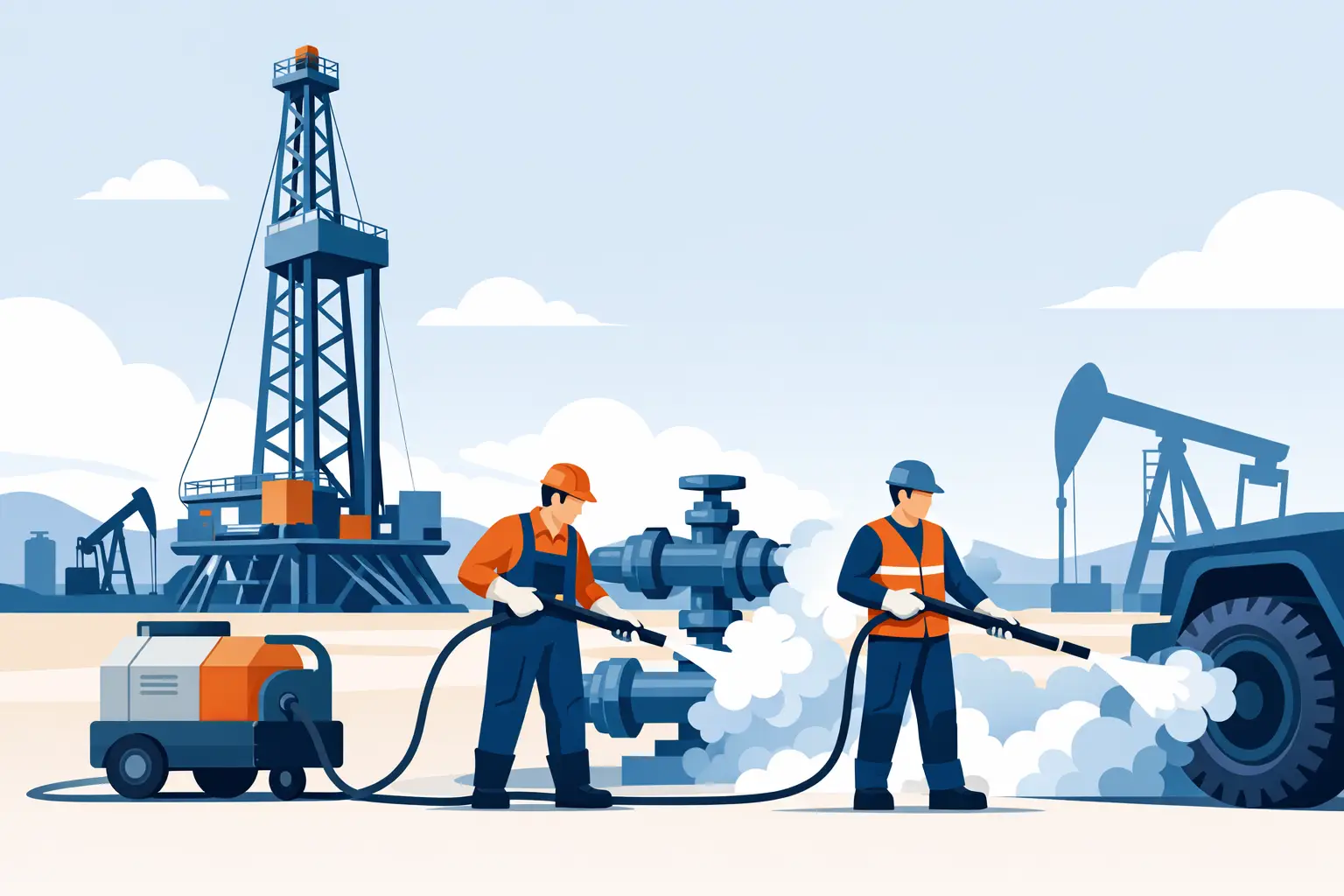
A fouled tank, greasy pump package, or buildup-covered component can stop a maintenance plan before the crew turns the first wrench. Oilfield steam cleaning services give operators a controlled way to cut through oil residue, paraffin, dirt, and other field buildup so equipment can be inspected, serviced, and returned to work without unnecessary delay.
For Ohio operators working through completion, workover, production, and maintenance activity, the value is not simply a cleaner piece of equipment. It is a crew that can mobilize with the right equipment, work around an active field schedule, and coordinate cleaning with vacuum, hauling, excavation, or service-rig support when the job requires more than one capability.
Where Oilfield Steam Cleaning Services Fit
Steam cleaning is most effective when contamination is preventing access, inspection, repair, or safe handling. Field equipment accumulates residue in places that are difficult to address with cold-water washing alone. Heated steam helps loosen heavy oil, grease, mud, waxy buildup, and production-related residue from exterior surfaces, fittings, skids, valves, piping, and equipment components.
Common applications include cleaning production equipment before maintenance, preparing tank exteriors and access areas for inspection, removing buildup from pumps and flowline components, and washing down work areas after fluid-handling activity. It can also support workover and completion operations when crews need clearer access to equipment before repairs, rig-up, or demobilization.
The work has to match the condition of the asset. A light exterior washdown is different from cleaning equipment that has been exposed to heavy crude, produced fluids, road mud, or extended service conditions. The right approach depends on the residue, the surface being cleaned, the surrounding equipment, containment requirements, and what happens next on the job.
Steam Cleaning Is a Maintenance Tool, Not Just Cleanup
A clean surface gives a maintenance crew a better starting point. Leaks are easier to identify when fittings and connections are not buried under residue. Corrosion, damaged hoses, worn components, and compromised guards are easier to see. Mechanics can work with better access, and inspection personnel can make decisions based on the condition of the equipment rather than what is covering it.
That matters on equipment where downtime carries through the schedule. A production interruption can affect tank handling, fluid transport, service-rig timing, labor coordination, and the availability of other contractors. Cleaning ahead of planned maintenance can reduce lost time, but it also helps when an issue is found unexpectedly and the crew needs to get eyes on the equipment fast.
Steam cleaning also supports professional site conditions. A controlled washdown helps limit tracking of oily material across work areas and keeps equipment more manageable for crews moving between tasks. It is not a replacement for containment, spill response, fluid recovery, or proper disposal procedures. It is one part of keeping the job organized and ready for the next phase.
Cleaning Before Inspection and Repair
Inspection quality depends on visibility. Before a repair, crews need to see flange faces, valve bodies, threaded connections, pump housings, guards, and structural areas without layers of field residue masking the condition underneath.
Cleaning before maintenance can prevent a simple repair from becoming a stop-and-start job. When the work area is already accessible, the service crew can focus on diagnosing the issue and making the repair. When equipment is heavily fouled, cleaning may need to be completed before maintenance can proceed safely and efficiently.
For tanks and vessels, the scope needs to be clearly defined before work begins. External steam cleaning, localized cleaning around fittings, and interior work are not interchangeable tasks. Interior work may require isolation, gas testing, ventilation, entry planning, fluid removal, and other controls based on the equipment and site conditions. Steam cleaning does not eliminate those requirements.
Cleaning During Workovers and Production Maintenance
Workover and production jobs rarely happen in a vacuum. A unit may need to be cleaned while vacuum trucks are handling fluids, a service rig is scheduled for the next operation, or a winch truck is moving equipment into position. The contractor that understands the sequence can help avoid crews waiting on one another.
For example, a tank battery or production location may need fluid handling and equipment cleaning before a repair can be completed. Coordinating the vacuum truck, steamer, service crew, and hauling equipment through one operating plan reduces handoffs. It also gives the field superintendent a clearer view of who is responsible for each stage of the work.
Darby Energy brings steam cleaning into a broader field-support operation that includes late-model vacuum trucks, hot oiling, service rigs, excavation, engineering, and heavy hauling. That capability matters when the cleaning task is connected to active maintenance rather than treated as a separate, standalone callout.
What a Field-Ready Steam Cleaning Crew Should Address
The steamer itself is only part of the job. A dependable oilfield cleaning operation starts with the condition of the equipment, crew readiness, access to the location, and an understanding of the downstream task. If a component must be repaired after cleaning, the crew needs to work without creating a new scheduling problem for maintenance personnel.
Before mobilization, the scope should identify the equipment involved, the type of buildup, the expected work area, site access, available water, containment expectations, and whether fluids or wash residue require recovery. This avoids arriving with a general washdown plan when the job actually requires vacuum support, extra hose reach, traffic coordination, or equipment movement.
At the location, the crew should establish a controlled work area and protect nearby electrical equipment, instrumentation, open connections, and surfaces that should not be exposed to direct cleaning. Steam can be highly effective, but it is not appropriate to direct high heat and pressure at every component without considering seals, coatings, wiring, gauges, and operating status.
A sound field plan typically accounts for four practical factors:
- The material being removed and where it will go after cleaning.
- The equipment condition, including hot surfaces, pressure hazards, moving parts, and energized components.
- The next operation, whether that is inspection, repair, hauling, rig work, or return to production.
- The crew and equipment needed to complete the work without repeated mobilizations.
These details are where field experience shows. The fastest cleaning job is not always the best job if it creates residue-management issues, delays another crew, or leaves critical areas inaccessible for the work that follows.
Matching Steam Cleaning to the Actual Job
Not every cleanup need calls for steam. In some cases, vacuum services, hot oiling, mechanical removal, or a combination of methods may be more effective. Heavy wax or paraffin deposits may require heat application tailored to the component and material. Free liquids and sludge require recovery planning. Mud-covered access roads, pads, and equipment can involve excavation or site-restoration considerations that go beyond a steamer.
The operational question is straightforward: what has to be clean, why does it need to be clean, and what work follows? If the answer is a quick exterior washdown before a visual inspection, steam may be the direct solution. If the answer involves tank contents, contaminated wash water, restricted access, or a larger maintenance outage, the scope needs more coordination.
This is also where a single-provider model can help. Instead of assigning one contractor to clean, another to remove fluids, another to move equipment, and another to perform the repair, operators can build the sequence around the actual field conditions. Fewer handoffs can mean less time spent waiting for the next vendor to arrive, although the right setup still depends on project size, timing, and site-specific requirements.
Planning for Better Results in the Field
A productive service call starts before the truck rolls. Give the contractor the asset type, current operating condition, known contamination, location access, and the reason for cleaning. If the job is tied to a scheduled workover, tank move, inspection, or repair, provide that timing as well. The cleaning crew can then plan around the operation instead of becoming an interruption to it.
If fluid recovery or disposal is part of the scope, address it upfront. If equipment has to be moved, confirm the load, access route, and required hauling configuration. If the work is near active production equipment, identify isolation requirements and who controls the area. Clear field communication prevents avoidable delays and keeps the cleaning work aligned with the larger job.
When equipment is covered up, the real problem is often still underneath it. Get the right steam cleaning support on location early enough that your maintenance crew can see the work, make the repair, and keep the job moving.
Leave a Reply