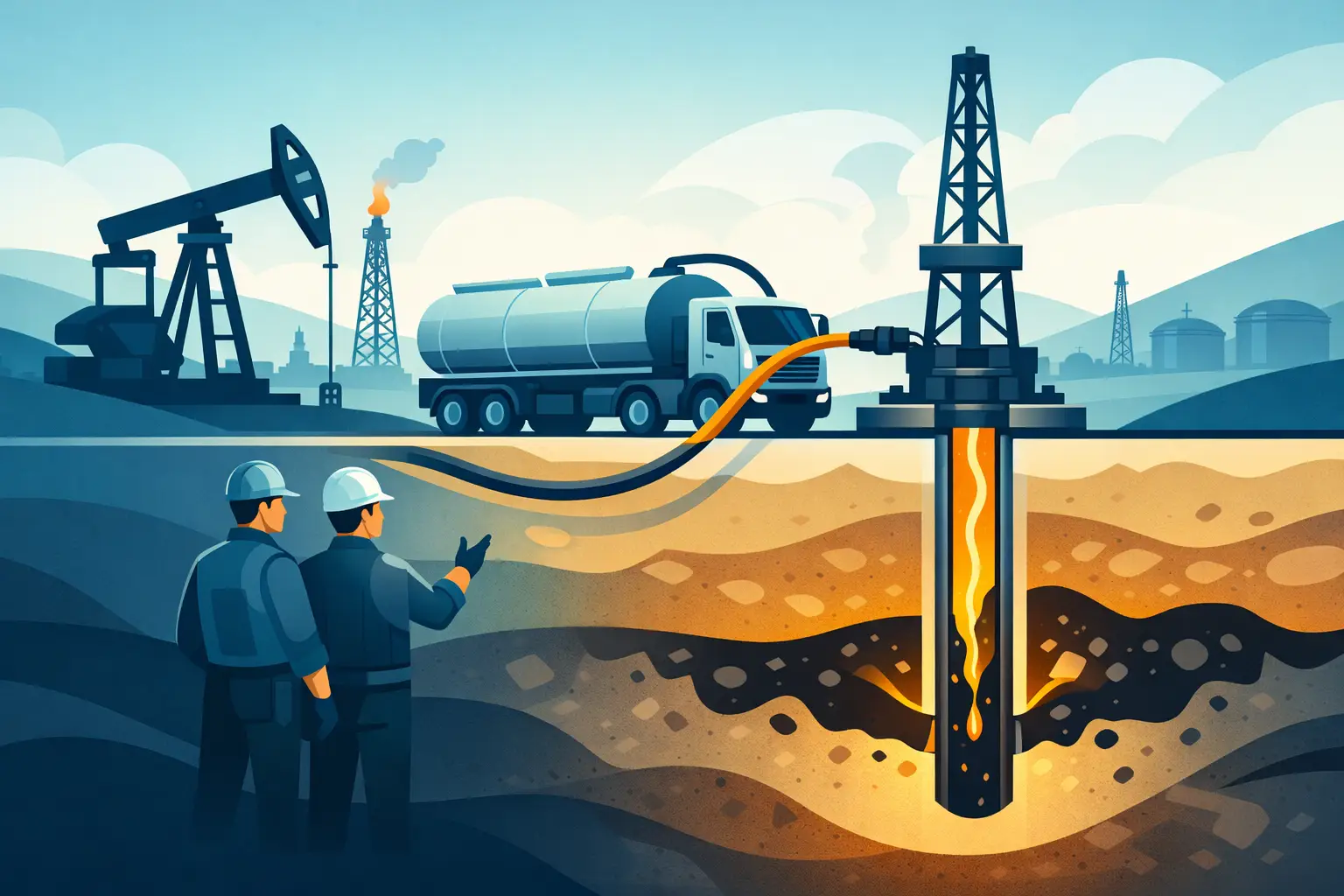
A well can be producing on schedule in the morning and restricted by paraffin, heavy fluid, or frozen equipment before the next shift. When that happens, the response needs to be more than a truck at the gate. Hot oiling services put controlled heat, pumping capacity, and an experienced field crew on the location to restore flow paths, support maintenance work, and keep the job moving.
For Central Ohio operators, hot oiling is often tied directly to production uptime, workover readiness, tank and line maintenance, and cold-weather reliability. The right service depends on the well condition, the fluid being handled, access at the location, and what equipment needs to stay online while the work is performed.
What Hot Oiling Services Handle in the Field
A hot oiler is used to heat and circulate fluids where temperature is the practical answer to a production or maintenance problem. Common field applications include melting paraffin accumulation in tubing and flowlines, heating tanks and transfer lines, circulating wells during maintenance, assisting with fluid displacement, and preparing equipment for workover activity.
The value is not simply adding heat. It is applying heat at the proper rate, pressure, and volume for the equipment and conditions on location. Too little heat may not move the restriction. Excessive temperature, pressure, or circulation time can create unnecessary risk for tubing, seals, tank coatings, produced fluids, and surface equipment. The crew has to understand the job before it starts.
On a producing well, paraffin control is a common reason to mobilize. Wax can build in tubing, flowlines, valves, and associated production equipment as fluids cool. That buildup can restrict flow, increase backpressure, interfere with chemical treatment, and turn a manageable maintenance item into deferred production. Hot oil circulation can break up the restriction and help return the system to normal operating conditions.
Hot oiling also supports jobs that are not strictly about wax. During winter operations, heating can keep fluids moving through exposed lines and prevent downtime around tanks, separators, and transfer points. Before a workover or mechanical repair, crews may use a hot oiler to circulate and condition fluids so service-rig work can proceed without avoidable delays.
The Job Starts Before the Burner Fires
A productive hot oiling job begins with clear information from the operator or field superintendent. The crew needs to know the target equipment, the suspected restriction, available tie-in points, fluid type, desired circulation path, site layout, and any active work occurring nearby. That is how the field team arrives prepared to work the actual problem instead of troubleshooting basic logistics after mobilization.
Access matters. A hot oiler needs a stable position, room to safely run hose, and a workable route for any supporting vacuum truck, service rig, winch truck, or hauling equipment. On a wet lease road or a restricted tank battery, the truck that can reach the site is only part of the equation. The job needs a setup that keeps personnel clear of lines, traffic, rotating equipment, and active production hazards.
The operating plan should also establish the intended temperature range and circulation parameters. Those numbers are not generic. A tank-heating job, a paraffin circulation job, and a line-thawing job may all require different approaches. The crew must account for the condition of the well and surface equipment, the fluid properties, and the operator’s production requirements.
Temperature Is a Tool, Not the Whole Solution
Heat can improve fluid movement, but it does not correct every cause of restricted production. Scale, mechanical damage, collapsed tubing, pump failures, and downhole issues may require different intervention. A competent crew recognizes when hot oiling is the right first step and when the well needs further diagnostic work, fluid handling, or service-rig support.
That distinction protects the schedule and budget. Sending heat at a mechanical problem can consume time without changing the outcome. On the other hand, identifying a wax-related restriction early and circulating it out can prevent a larger service event later.
Equipment Capacity and Crew Execution Matter
A hot oiler has to deliver dependable heat and circulation under field conditions, not just look capable on a spec sheet. Burner configuration, tank capacity, pump condition, hose inventory, fittings, pressure controls, and truck reliability all affect the job. A unit that cannot maintain the required temperature or volume can extend downtime at the exact point when the operator needs a fast response.
Crew experience is equally important. Operators need to monitor pressure, temperature, returns, fluid levels, and the condition of the equipment throughout the job. They need to communicate with the company representative and adjust the operation if the well response calls for it. This is field work where conditions can change quickly, particularly on older wells, congested locations, or sites with ongoing completion and workover activity.
Darby Energy brings hot oiling into a broader field-support operation, which matters when the job develops beyond a single truck callout. If hot oil circulation identifies a need for vacuum support, excavation, service-rig work, engineering input, or heavy hauling, the operator can coordinate those capabilities through one field contractor rather than restarting the vendor process.
Hot Oiling During Workovers and Maintenance
Hot oiling is often most effective when it is planned as part of a maintenance sequence. A well may need fluids circulated before pulling equipment. A tank battery may require heating before cleanup or transfer. A flowline may need to be cleared before production testing or repairs can begin. Scheduling the hot oiler around the service rig, vacuum truck, and site crew reduces waiting time between steps.
For workover operations, timing is critical. The service rig is not there to wait on a line that will not circulate or equipment that cannot be safely handled. Bringing in hot oiling support early can help condition the well and surface system before rig operations reach the point where flow restrictions become a delay.
The same principle applies after maintenance. Once repairs are made, controlled circulation may help confirm that lines and equipment are operating as intended. It depends on the repair scope and the operator’s procedures, but the hot oiler can be part of a complete return-to-service plan rather than an isolated response.
Cold Weather Calls Require More Than Speed
Winter callouts place added demands on equipment and crews. Frozen valves, thickened fluids, inaccessible sites, and limited daylight can turn a routine heating job into a coordinated field operation. Quick mobilization remains important, but a rushed setup is not the same as an efficient one.
The crew needs equipment that is maintained for cold conditions, enough hose and fittings for the actual routing, and a clear understanding of what needs to be heated first. In some cases, restoring a critical transfer point or flowline may take priority over heating an entire system. The practical objective is to safely restore movement and protect the next operation on the schedule.
Choosing a Hot Oiling Contractor
For operators, the right hot oiling provider is measured by response, equipment readiness, and field judgment. Price matters, but the lower callout rate can disappear quickly if the unit arrives without the needed capacity, the crew cannot tie into the system efficiently, or the job requires another contractor to finish the work.
Look for a provider that can discuss the job in operational terms: the circulation route, expected fluid volume, tank condition, equipment access, pressure limitations, and coordination with other crews. That conversation signals whether the contractor is prepared to execute or simply dispatch a truck.
It also helps to use a contractor with supporting capabilities close at hand. A hot oiling job can reveal tank bottoms that need removal, a line issue that requires excavation, or a well condition that calls for workover support. Coordinated equipment and personnel reduce handoffs when the plan changes in the field.
When a well, line, or tank system starts losing flow, early action usually gives the operator more options. Provide the field details, get the right equipment mobilized, and address the restriction before it expands into a longer production interruption.
Leave a Reply