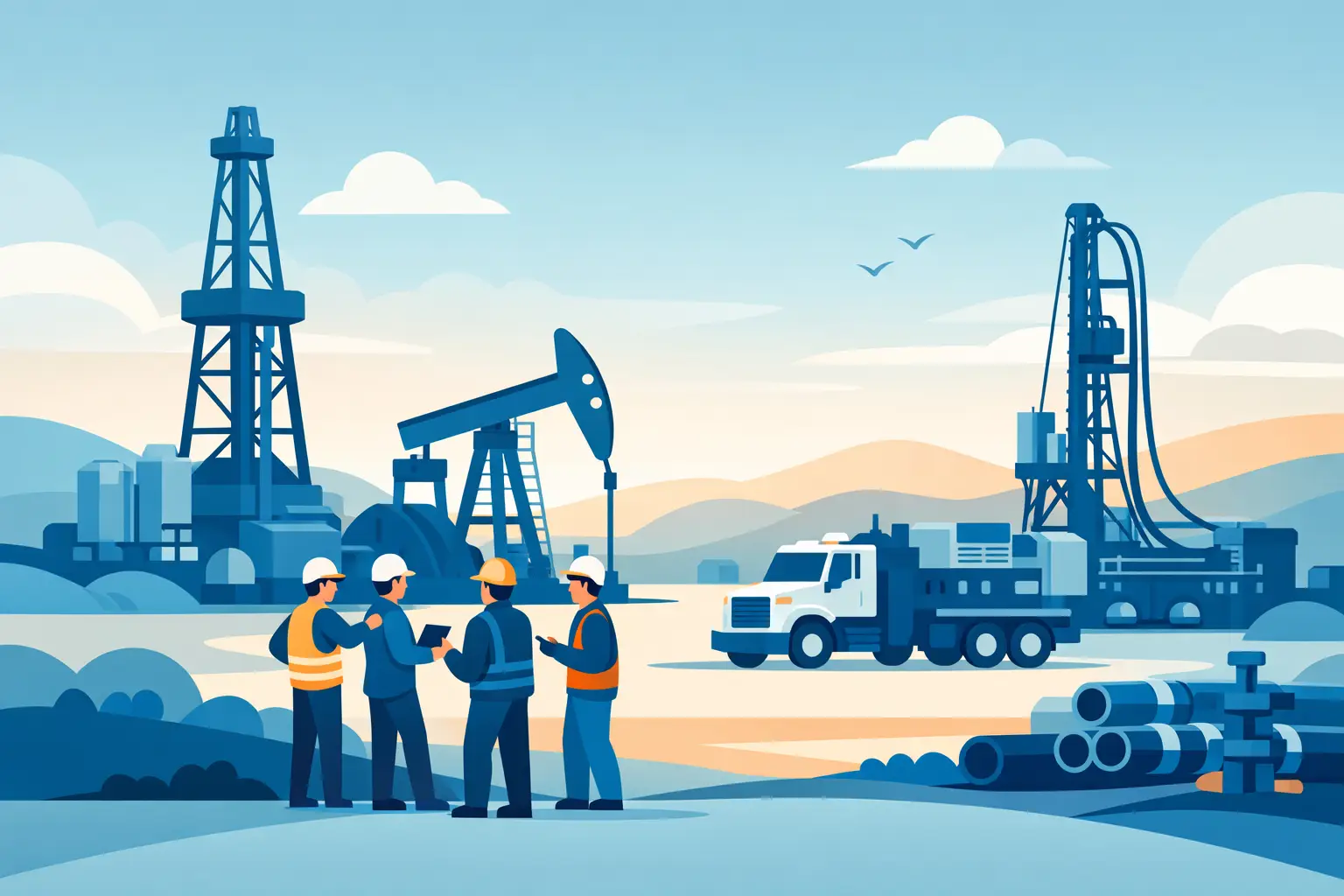
A completion schedule can look sound on paper and still lose time in the field. A service rig is waiting on access work. Fluid needs to move before the next operation. Production equipment has to be set, hauled, cleaned, or repaired without creating a gap between crews. Effective oil well completion services close those gaps by bringing the right equipment, operators, and field coordination to the location when the job requires it.
For Central Ohio operators, completion support is rarely one isolated service call. It is a sequence of work that must hold together through changing site conditions, equipment availability, weather, trucking windows, and production demands. The contractor that can support more of that sequence helps keep the location controlled and the schedule moving.
What Oil Well Completion Services Cover in the Field
Completion work begins before a well is ready for production and continues through the transition to routine operations. The exact scope depends on the well design, formation, production plan, and condition of the location, but field support commonly includes service-rig work, fluid handling, site construction, equipment transportation, tank work, cleaning, and engineering oversight.
The practical requirement is coordination. A completion crew may need a prepared pad and stable access before heavy equipment can enter. The rig may require vacuum support while fluids are being circulated or recovered. Tanks, separators, pumps, and related production equipment must arrive in the correct order, be placed safely, and remain accessible for follow-up work. Treating each task as a separate vendor event adds handoffs at the point where delays are most expensive.
An integrated contractor can organize the field side of the work around the actual operating plan. That does not eliminate the need for clear communication from the operator or completion supervisor. It does reduce the number of calls required to align excavation, rig support, hauling, and fluid services once the work is underway.
Service Rigs for Completion and Early Well Work
A completion or workover service rig is often central to the job. Rig work may include tubing and rod handling, pump changes, well cleanout, production troubleshooting, repair work, and preparation for return to service. The right rig and crew need to match the well depth, load requirements, access constraints, and task at hand.
Crew experience matters as much as iron. Completion operations are affected by the condition of existing equipment, changing downhole indications, fluid behavior, and the realities of working on an active lease. Experienced operators recognize when a job requires a different approach, when support equipment needs to be staged closer, and when the next operation should be prepared before the current one is complete.
Service-rig availability also has a direct effect on production downtime. A well waiting on a rig, parts delivery, or fluid support can remain offline longer than planned. Fast mobilization is valuable, but it has to be backed by equipment readiness, qualified operators, and a clear understanding of the work scope.
Completion Support Does Not End at Rig Release
Rig release is not always the finish line. A well may need post-job cleanup, fluid removal, tank service, equipment moves, site restoration, or follow-up maintenance before the location is ready for steady production. Planning those needs early keeps the job from stalling after the primary rig work is done.
It also helps avoid unnecessary remobilization. If a vacuum truck, winch truck, excavation crew, or float can be scheduled around the service-rig operation, the operator has fewer loose ends to manage after the well work is complete.
Fluid Handling Is Part of Completion Control
Fluids can dictate the pace of a completion job. Produced water, load fluid, tank bottoms, wash water, and recovered material must be handled with the right equipment and under the site-specific requirements of the operation. Vacuum truck capacity, pump performance, hose layout, and disposal logistics all affect how efficiently the crew can work.
Late-model vacuum trucks in the 90-110 barrel range provide the working capacity needed for many field fluid-handling assignments. However, capacity alone is not the decision point. The job may call for repeated pulls in tight access, triplex pumping support, coordinated transfer work, or a quick response to an unplanned condition at the location. The truck, operator, and dispatch plan have to fit the operating window.
Hot oiling and steam cleaning can also be necessary during completion, startup, and production support. Wax, paraffin, buildup, and contaminated equipment can interfere with flow and make routine work take longer. A properly configured hot oiler or steamer gives crews a direct way to address those conditions without waiting for separate equipment to arrive.
Site Development Sets the Pace Before Equipment Arrives
Completion equipment cannot work efficiently on a poorly prepared location. Access roads, pad conditions, drainage, grading, containment needs, and equipment placement affect both safety and job duration. Wet ground, narrow approaches, unstable shoulders, and inadequate working room can turn a routine mobilization into a costly delay.
Oilfield excavation and full site development should be planned around the equipment that will actually use the site. A location built for light traffic may not be ready for a service rig, loaded vacuum truck, winch truck, or Rolling Tailboard Float. The field plan needs enough room for safe movement, staging, turning, and placement while maintaining access for the crews that follow.
There is a trade-off. Building more site than the job requires adds cost, while underbuilding it can create repeated maintenance and access issues. The practical approach is to evaluate the planned work sequence, expected loads, drainage conditions, and future service needs before the first major piece of equipment mobilizes.
Heavy Hauling and Equipment Placement Need the Same Plan
Completion schedules depend on equipment arriving when it is needed, not simply when it is available. Production tanks, service equipment, excavators, support units, and oversized loads require transportation capacity that understands lease roads, site conditions, load securement, and placement requirements.
A winch truck and Rolling Tailboard Float provide working options for moving and positioning equipment across demanding field conditions. The value is not just transport from point A to point B. It is the ability to coordinate the move with site readiness, rig activity, and the sequence of equipment installation.
Heavy hauling becomes especially important when conditions change mid-job. A tank may need to be swapped, a unit may need to come off location for repair, or equipment may need to be repositioned to make room for the next operation. Local capacity shortens the time between identifying the problem and putting equipment in motion.
Engineering Oversight Brings Field Decisions Together
Completion work is hands-on, but it should not be disconnected from engineering. Petroleum engineering support helps operators align field execution with production goals, equipment selection, fluid considerations, and longer-term well performance. That connection is useful when a well’s condition changes, a workover scope expands, or a completion plan needs to be adjusted around actual field results.
Engineering does not replace field judgment. The best results come when engineering direction, project management, and experienced operators are working from the same operating picture. The rig crew sees real-time conditions at the wellhead. The fluid team understands what is moving through the location. The project lead keeps the schedule, equipment, and follow-up work aligned.
For smaller operators and independent producers, that combined support can be particularly useful. It provides a practical bridge between the technical plan and the equipment, crews, and logistics needed to execute it.
Choosing a Completion Contractor for Central Ohio Work
The right provider is not always the one with the longest equipment list. The better question is whether the contractor can take responsibility for the portion of the job they are assigned and coordinate effectively with the rest of the location. A capable completion partner understands that a delayed truck, unprepared pad, or missing support unit can affect every crew on site.
Look for service-rig experience, maintained specialty equipment, responsive dispatch, and the ability to support related work without forcing the operator to source multiple last-minute vendors. Ask how the contractor handles changing scopes, fluid volumes, difficult access, equipment moves, and post-completion service needs. Those answers show whether the operation is built for real field conditions.
Darby Energy LLC brings service rigs, excavation, vacuum trucks, hot oiling, steam cleaning, petroleum engineering, project management, and heavy hauling under one field-focused operation. That combination gives Central Ohio operators a practical way to consolidate support around a completion, workover, or active production job.
When the well is ready for the next operation, the job should not wait on a chain of disconnected vendors. A prepared location, capable crew, available equipment, and clear field coordination give the completion team room to keep working.
Leave a Reply