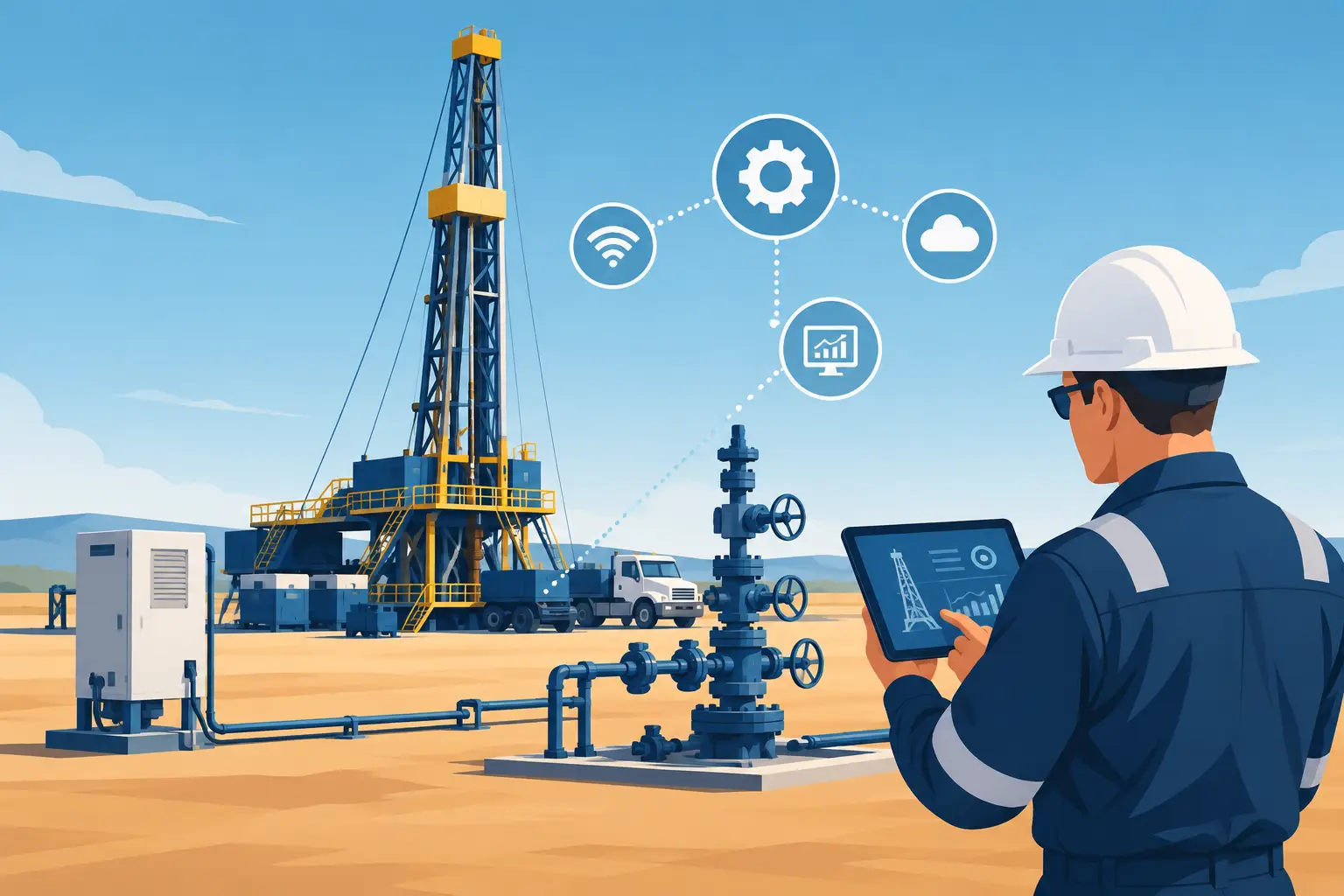
A pressure trend can flag a developing issue before it becomes lost production. A tank level alert can prevent an overflow. Remote data can tell a production foreman where to send a crew first. That is where oilfield automation earns its place – not as a replacement for field execution, but as a better way to see the work that needs to be done.
For operators managing producing wells, workovers, tank batteries, and active completion schedules, the value is practical: fewer blind spots, faster decisions, and better use of people and equipment. But automation only delivers that value when the underlying field operation is ready to respond. A sensor can report a problem. It cannot pull rods, circulate a well, haul fluids, steam equipment, rebuild a location, or move a heavy load into place.
What Oilfield Automation Should Accomplish
At the wellsite, automation generally means using instruments, controls, communications, and software to monitor or manage operating conditions with less manual intervention. The application may be as straightforward as remote tank-level monitoring or as involved as automated control of pumps, separators, chemical injection, and artificial lift equipment.
The right system depends on the asset. A mature conventional well may need dependable alarm reporting and production visibility more than a complex control package. A multi-well battery with recurring fluid-handling demands may benefit from level controls, remote shut-in capability, and clear exception reporting. A workover program may gain more from organized service history and real-time job status than from additional automated hardware.
The common objective is not to automate every task. It is to identify conditions early, reduce unnecessary site visits, and get qualified personnel to the right location with the right equipment before a small issue becomes a production interruption or safety exposure.
Automation Does Not Eliminate Field Work
There is a gap between knowing a well has a problem and correcting it. That gap is where many automation plans fall short.
A high fluid level, declining pressure, pump fault, or shutdown alarm still requires an operational response. Depending on the condition, that response may involve a vacuum truck, hot oiler, steamer, winch truck, workover rig, excavation crew, or a combination of services. Site access, load coordination, weather, containment, tank capacity, and equipment availability still control how quickly the job gets completed.
This is especially true in older fields and workover-heavy operations. Remote data may show that a well is loading up, but the repair can still require tubing work, rod handling, pump replacement, circulation, fluid removal, or cleanup. Automation improves the decision window. Experienced crews complete the recovery.
For project managers, the practical question is not, “Can this location be automated?” It is, “When the system identifies an exception, what happens next?” A response plan should identify who receives the alarm, who confirms the condition, what equipment may be required, and how quickly field support can mobilize.
Start With Failure Points That Cost Time
The strongest automation programs are built around recurring operational problems, not around a generic technology checklist. Review service tickets, production losses, callout patterns, spill risks, and repeated site visits. Those records usually show where monitoring or remote control could remove friction.
Common starting points include tank levels, separator pressures, line pressure, pump status, burner and heater conditions, chemical rates, wellhead pressure, and power supply status. These are useful because a change in one of these conditions often leads directly to a field decision.
For example, remote level data is useful when it gives dispatch enough notice to schedule vacuum-truck support before storage becomes critical. A pressure alarm is useful when it distinguishes a true well problem from a communications issue or temporary operating change. Pump runtime data is useful when it supports a maintenance decision instead of creating another dashboard that no one checks.
The field team should be part of this review. Operators and service crews know which alarms are meaningful, which readings are commonly misleading, and which failures demand an immediate response. Their input prevents an automated system from producing noise instead of actionable information.
Avoid alarm overload
An alarm that is triggered repeatedly without a clear action will eventually be ignored. Set practical thresholds, establish escalation rules, and review nuisance alarms after startup. If a low-priority condition can wait until the next scheduled route, label it that way. If an alarm requires a same-day service call, the notification should reach someone with authority to make that call.
Alarm management also needs field context. A pressure change during a controlled shutdown does not mean the same thing as a pressure change during normal production. Temporary workover operations, tank cleanouts, hot oiling, and line work can all affect readings. The automation system and the daily field plan need to match.
Build the Response Plan Before Installation
Installing instruments is usually easier than building reliable response procedures. Before a new system goes live, operators should determine the expected action for each critical exception.
A tank-level alarm may call for a 90-110bbl vacuum truck, route adjustments, and confirmation of disposal or transfer capacity. A paraffin-related production issue may require hot oiling or steam cleaning. A mechanical well problem may require service-rig availability, appropriate tools, and a crew that understands the existing completion configuration. If access is compromised, excavation and site work may need to happen before the repair crew can safely enter.
That is why integrated field support matters. When multiple vendors must be contacted after an alarm occurs, response time can stretch while the condition worsens. A contractor that can coordinate well service, fluid handling, hauling, site work, and engineering support reduces handoffs during a time-sensitive job.
Darby Energy supports this kind of field response with experienced service-rig crews, late-model vacuum trucks, hot oiling, steam cleaning, excavation, project coordination, and heavy-haul capability. The goal is not to sell automation hardware. It is to make sure the field work behind the data can be executed without unnecessary delay.
Data Quality Is a Field Discipline
Poor data creates poor decisions. A bad transmitter, weak communications signal, uncalibrated level device, plugged impulse line, or incorrectly labeled point can send a crew to the wrong location or hide a real problem.
Treat automated data points like any other piece of operating equipment. They need commissioning, periodic verification, maintenance ownership, and documented changes. When a tank is replaced, a line is rerouted, or a control setting changes, the digital record must be updated with the field configuration.
Communications deserve the same attention. Some locations have dependable cellular coverage. Others may require alternate communications methods, local data storage, or a design that can tolerate delayed reporting. It depends on terrain, distance, power availability, and the consequence of losing visibility. A low-rate marginal well does not require the same architecture as a high-volume location with limited storage margin.
Cybersecurity also belongs in the plan. Remote access should be limited to authorized users, credentials should be managed, and control changes should be traceable. Field convenience should not create an uncontrolled path into operating equipment.
Where Automation Delivers the Best Return
The return on oilfield automation is often measured less by labor reduction than by avoided disruption. Fewer emergency callouts, fewer unnecessary trips, less lost production, improved fluid management, and earlier mechanical intervention can justify the investment.
Still, not every wellsite needs the same level of automation. The best candidates are locations with recurring operational risk, costly travel time, constrained tank capacity, frequent manual checks, production sensitivity, or a history of preventable callouts. A small, stable location close to regular field routes may be better served by disciplined inspections and reliable service support.
Start with a defined operational problem and measure the result. Track alarm-to-response time, number of avoided site visits, production deferred, overflow incidents, maintenance frequency, and emergency service calls. If the system does not improve a decision or a response, adjust it.
Automation is most useful when it gives the field a head start. Keep the data focused, keep the alarms meaningful, and make sure the crew, equipment, and logistics are ready when the wellsite calls for action.
Leave a Reply