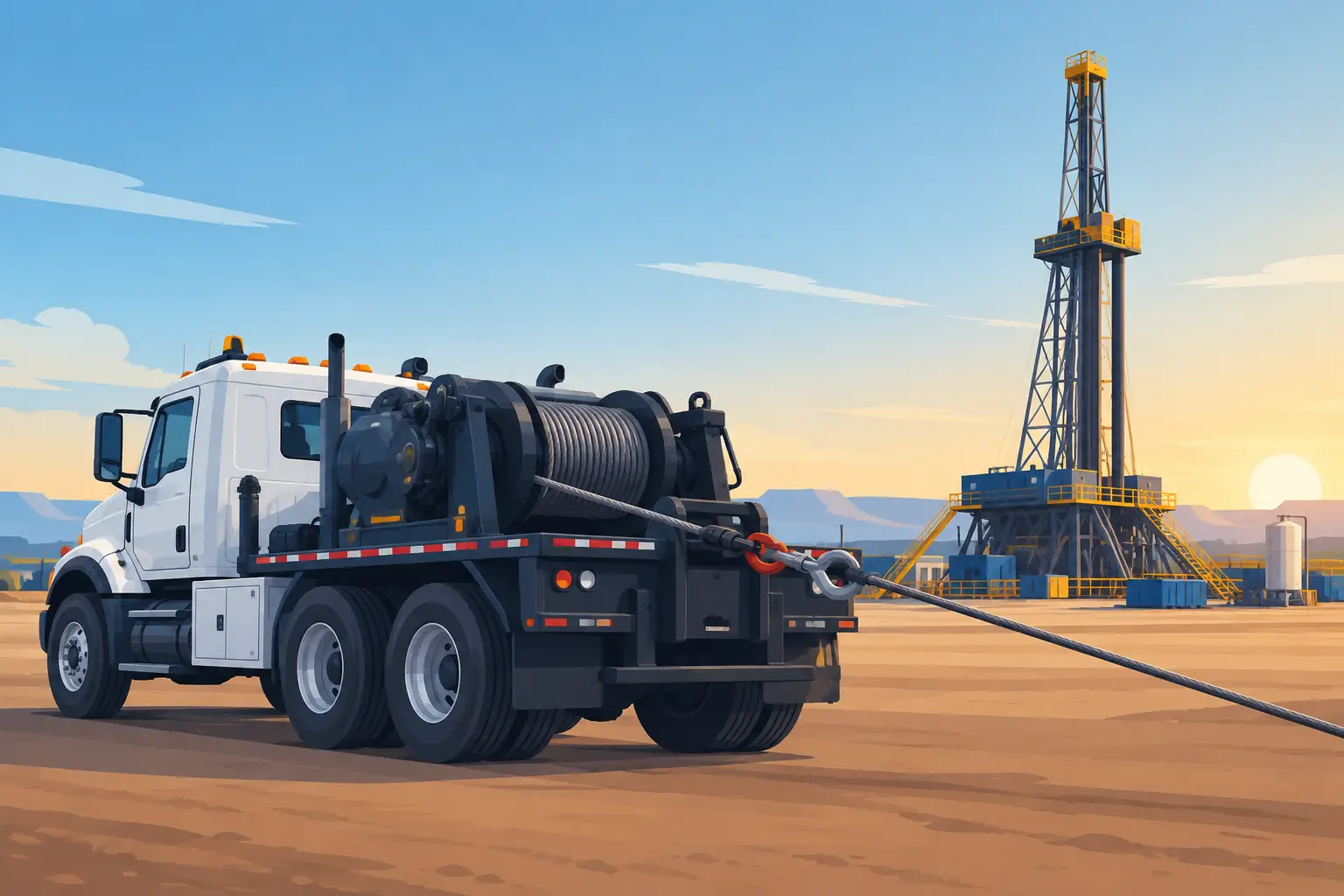
A winch truck performance review is not a spec-sheet exercise when a load is waiting at the yard, the lease road is soft, and the next crew is scheduled behind the move. For oilfield operators, performance comes down to whether the truck, winch, trailer, driver, and route plan can move the intended load safely and on schedule without creating a recovery job of their own.
Winch trucks fill a critical role between the yard and the well site. They handle equipment that may be oversized, difficult to access, or needed with little notice: service-rig components, tanks, pipe, production equipment, skids, mats, and support assets. A useful review measures the complete hauling operation, not just advertised horsepower or maximum winch rating.
What Winch Truck Performance Really Means
A capable truck must have enough pulling power for the load, but capacity alone does not establish field readiness. The truck also needs stable load control, a properly matched trailer, dependable hydraulics, good braking performance, and a crew that understands the site conditions before the load is secured.
The best performance standard is simple: can the unit mobilize, load, secure, transport, and unload the planned equipment without unnecessary delay or added exposure? That answer depends on the job. A controlled yard load on firm level ground calls for a different setup than a narrow lease entrance, winter mud, a steep approach, or an equipment pickup beside an active workover.
For project managers, the practical question is not whether a winch truck can move a load under ideal conditions. It is whether the hauling contractor can identify limitations early, bring the right configuration, and keep the job moving when field conditions change.
Winch Truck Performance Review: The Core Checks
Pulling Capacity and Hydraulic Response
Winch capacity needs to be evaluated against the real load, not only the stated equipment weight. Load angle, rolling resistance, trailer deck condition, ground surface, and equipment condition all affect the pull. A disabled unit with dragging components or a skid settled into soft ground can require substantially more force than its nameplate weight suggests.
Hydraulic response matters just as much as maximum pull. The operator needs controlled line speed to bring a load onto the trailer without shock loading, sudden shifts, or hurried corrections. Smooth engagement is especially valuable when loading production equipment, rig components, or other freight with a high center of gravity.
A strong setup uses the proper winch line, rigging, and attachment points for the planned pull. Crews should inspect cable condition, hooks, shackles, snatch blocks, and load connections before starting. If the pull requires an improvised connection, the job should be reassessed before the line comes tight.
Trailer Match and Load Geometry
A winch truck only performs as well as the trailer behind it. Deck length, ramp angle, capacity, axle spacing, and tie-down locations must fit the equipment being moved. Low-clearance equipment may need a lower loading angle. Longer loads may require a different deck arrangement. Concentrated weight can create axle-loading issues even when the total load appears to be within limits.
Load geometry should be reviewed before dispatch. The crew needs the dimensions, weight, center of gravity if known, pickup conditions, and delivery-site access details. Without those facts, a move can arrive with the wrong trailer, inadequate securement options, or no workable path for loading.
Rolling Tailboard Float equipment can be the better choice for certain heavy or difficult-to-load assets. The decision depends on load profile and site conditions, not habit. Using the right hauling configuration from the start reduces handling time and lowers the chance of damage to equipment, ramps, or lease roads.
Load Securement and On-Road Control
Securement is where hauling performance becomes visible. Chains, binders, straps where appropriate, blocking, and edge protection must work together to restrain the load in forward, rearward, and lateral movement. The goal is not to add hardware until the trailer looks full. The goal is to secure the equipment for the route, the road conditions, and the expected stops.
Good operators build securement into the loading sequence. They account for how the load sits on the deck, where it can shift, and whether the tie-down angle provides effective restraint. They also recheck securement after the initial travel period, particularly after rough lease roads or a route with significant grades.
On-road control includes braking, steering, visibility, and weight distribution. A truck that can pull a load but cannot manage it confidently through a tight entrance, wet turnout, or congested location is not performing at the level the job requires.
Uptime Is a Field Performance Metric
Mechanical availability is one of the most important measures in any winch truck performance review. A late truck creates more than a transportation problem. It can idle a completion crew, delay excavation, hold up a workover sequence, and force other contractors to wait on equipment that should already be on location.
Late-model equipment helps, but readiness is maintained through inspection and preventive service. Hydraulic lines, winch controls, cable condition, tires, brakes, lighting, trailer components, and safety equipment all need regular attention. A pre-dispatch check should verify that the unit is prepared for the specific move, not merely available in the fleet.
The most dependable contractors also plan for the common causes of delay. They confirm pickup contacts, equipment dimensions, site directions, access restrictions, permit needs, and delivery timing. A truck can be mechanically sound and still lose half a day because nobody confirmed that the gate was locked, the access road had been altered, or the equipment was not ready to load.
Route Planning Starts Before the Truck Leaves
Oilfield transportation routes are rarely just highway miles. The final few miles may include narrow township roads, soft shoulders, low clearances, active construction traffic, or lease roads that change quickly after rain. A route plan must account for every segment, including where the truck can turn around, stage safely, and access the loading point.
Weather changes the calculation. Freeze-thaw cycles, heavy rain, and seasonal road restrictions can affect access and load timing. In some cases, delaying a move or changing the equipment configuration is the safer choice. That is not lost performance. It is disciplined decision-making that prevents a stuck truck, damaged road, or missed delivery window.
Ohio field operations often require this level of local judgment. A hauling provider that knows the difference between a mapped route and a workable route can prevent costly surprises at the gate.
Crew Execution Separates Available From Dependable
The truck does not solve the job by itself. The driver and support crew determine whether the work is controlled, communicated, and completed without unnecessary downtime. Experienced personnel read the load, confirm the plan with the field representative, and stop when conditions do not match what was communicated.
Clear communication is essential around loading and unloading. One designated signal person, a defined exclusion area, controlled winch operation, and coordination with nearby crews keep a routine move from becoming a high-risk event. This is especially important on busy locations where vacuum trucks, service rigs, excavation equipment, and production personnel may be working within the same area.
A capable hauling partner also understands schedule pressure without letting urgency create shortcuts. If a load requires additional blocking, different rigging, site preparation, or a revised unloading plan, addressing it early is faster than correcting an unstable situation later.
Choosing the Right Standard for the Next Move
When evaluating a provider, ask how they assess the load before dispatch, how they match truck and trailer to the equipment, and how they handle access limitations. Ask about equipment inspection, load-securement practices, and whether the crew can coordinate with the broader field schedule. Those answers reveal more than a capacity number.
Darby Energy supports oilfield hauling as part of a broader field-service operation, with winch truck transportation and heavy-haul capability coordinated alongside excavation, well service, fluid handling, and project support. That integrated approach can reduce handoffs when a move is tied directly to site work or an active well-service schedule.
For the next equipment move, provide accurate weight, dimensions, pickup and delivery conditions, required timing, and any known access concerns before the truck is dispatched. A few clear details at the start give the hauling crew the information needed to bring the right equipment, build a sound plan, and get the load where the field needs it.
Leave a Reply