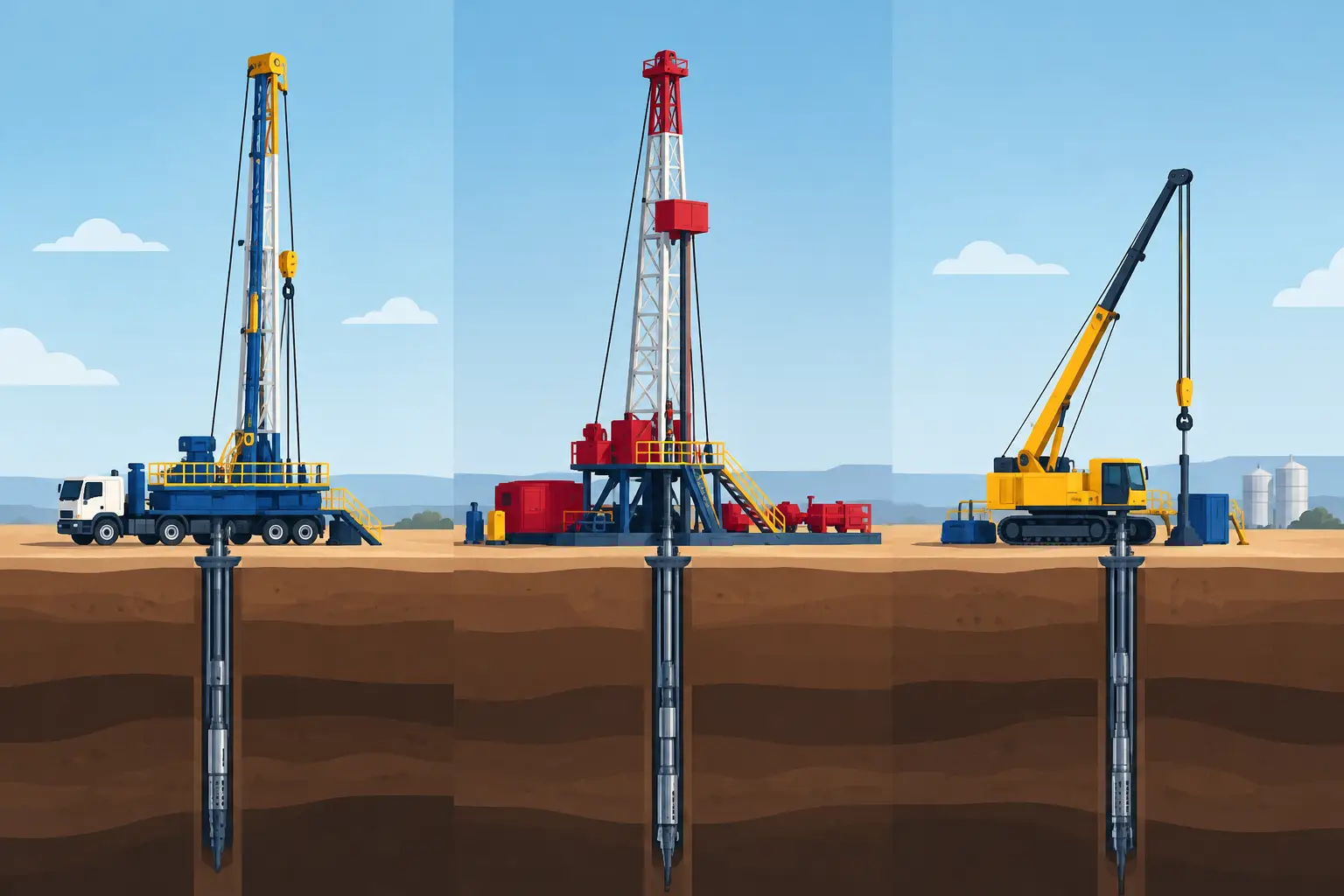
A workover rig comparison should start at the well, not with a generic equipment chart. A rig that looks adequate on paper can lose time once tubing weight, rod load, service depth, pressure-control requirements, site access, and supporting equipment are factored into the job. The right selection keeps the crew working safely and keeps a planned maintenance job from turning into an extended outage.
For operators, the practical question is not simply which rig has the highest rating. It is whether the rig, crew, hauling, fluid support, and site conditions are aligned with the work scope before the first load rolls in.
What a Workover Rig Comparison Must Measure
A useful comparison evaluates the complete operating package. Mast height and hook load matter, but they do not stand alone. The well configuration, anticipated string weight, pulling requirements, work basket needs, and available location footprint all affect what can be done efficiently.
The first step is defining the job clearly. A tubing leak, rod-part job, pump change, cleanout, packer pull, casing repair, or recompletion can call for very different rig capabilities. Planned depth is only one part of the decision. Actual pull load can change with scale, paraffin, fluid weight, stuck tools, deviation, and the condition of the production string.
A rig should be selected with operating margin, not just enough published capacity to meet the expected load. Working at the edge of a rig’s capability reduces options when conditions change downhole. It can also slow the job if additional equipment or a different unit has to be mobilized after the crew is already on location.
Depth, Mast Height, and Pipe Handling
Depth establishes part of the rig requirement, but the relationship is not as simple as matching a rig to total measured depth. Operators need to consider tubing size and weight, rod design, joints per stand, and whether the work requires singles, doubles, or longer stands. Mast height affects how efficiently the crew can handle the string and how much space is needed for proper pipe racking.
A shorter-mast unit can be a sound choice on a shallow well or tight location where access is the limiting factor. It may mobilize faster, require less setup area, and reduce costs for straightforward maintenance. On deeper work or jobs with significant tubular handling, however, a taller rig can reduce handling cycles and provide a better fit for the anticipated string.
Site constraints deserve the same attention as rig specifications. Overhead lines, tree cover, soft ground, narrow lease roads, tank placement, and nearby production equipment can limit mast-up space or restrict truck movement. A rig that can reach the well but cannot be safely positioned, guyed, supplied, or broken down is not the right rig for the job.
Pull Capacity Is More Than a Nameplate Number
Hook load and drawworks capacity are central to any workover decision. The crew needs enough pull to handle the planned tubing and rods while accounting for the realities that develop during a pull. A string that should come free may carry extra load from deposits, fluid friction, mechanical restriction, or a downhole failure.
Comparing rig capacity also means looking at the equipment supporting the pull. Blocks, lines, elevators, tongs, rod handling tools, and pressure-control equipment must match the planned service. The objective is a properly matched package, not a single high-capacity component surrounded by limitations.
There is a cost trade-off. Mobilizing an oversized rig for routine, shallow maintenance can add unnecessary expense and location impact. Mobilizing too light can create far greater cost when the job stalls. The best choice is the unit that provides a safe operating margin without bringing more equipment than the well and location can reasonably support.
Comparing the Support Around the Rig
A service rig does not work alone. Many delays blamed on the rig are actually caused by missing support equipment, slow fluid handling, poor site conditions, or uncoordinated trucking. Before mobilization, the service plan should identify what will be needed at the wellhead, in the pits or tanks, and on the access road.
For a workover involving circulation, cleanout, or fluid displacement, vacuum capacity and transfer capability need to be part of the plan. A late-model vacuum truck with 90-110 bbl capacity may be the difference between maintaining the work sequence and waiting on fluid handling. If the job requires pressure washing, heating, thawing, paraffin control, or equipment cleanup, hot oiling and steam cleaning should be scheduled as operating support rather than treated as an afterthought.
Heavy hauling matters as well. Tubing, rods, tanks, pumps, service equipment, and location materials have to arrive in the right order. Winch-truck service and a Rolling Tailboard Float can keep equipment moving when the job requires a controlled load-in or load-out. Coordinating these pieces through one field contractor reduces handoffs and helps prevent the common problem of a crew waiting on a truck that was dispatched without full job context.
Crew Experience Changes the Outcome
Two rigs with similar ratings can perform very differently based on the people operating them. A service crew needs to read changing well conditions, maintain control of tubulars, work cleanly around producing equipment, and communicate early when the planned procedure no longer matches what the well is showing.
Experienced operators are especially valuable when the job shifts from routine maintenance into troubleshooting. A pulled rod string may point to a pump issue, tubing wear, corrosion, scale, or a deeper production problem. Fast, accurate field observations help the operator decide whether to continue, alter the program, bring in additional tools, or involve engineering support.
For complex work, petroleum engineering oversight can help connect field findings to the next decision. That does not replace hands-on rig experience. It gives the operator and service team a clearer basis for evaluating production history, mechanical risk, treatment options, and the economics of additional work.
Match the Rig to the Job Stage
The correct unit can change as the project moves from completion into production maintenance or a larger workover. A completion or recompletion may require a broader equipment package, closer coordination with other service lines, and more detailed contingency planning. Routine production work generally favors quick mobilization, dependable crews, and equipment sized to the known well conditions.
For an older well with incomplete records, conservative planning is usually warranted. Confirm available depth data, casing and tubing details, known restrictions, wellhead configuration, fluid conditions, and access limitations before selecting the rig. If information is uncertain, build a contingency into the plan rather than assuming a lighter unit will be sufficient.
Weather and ground conditions also change the comparison. Ohio lease roads can become a mobilization issue quickly after heavy rain or freeze-thaw cycles. Site development, excavation, grading, and access improvements may need to occur before a service rig and support trucks can move safely. Addressing those conditions early protects the schedule and reduces the risk of equipment damage or unsafe positioning.
Questions to Settle Before Mobilization
A productive pre-job discussion should establish the expected work depth, tubular program, anticipated pull load, pressure-control needs, fluid volumes, and location restrictions. It should also identify whether the work may require circulation, hot oil, steam, vacuum service, hauling, excavation, or engineering input.
Just as important, clarify the decision path if the job changes. Who approves additional pulls, replacement tubing, cleanout tools, fluid disposal, or extended rig time? Who can authorize a change in work scope after the crew identifies a mechanical issue? Clear authority keeps field decisions moving without sacrificing control of cost or safety.
Darby Energy approaches workover planning as an execution problem, not a catalog exercise. The rig must fit the well, and the supporting equipment must be ready to keep the job moving when conditions demand more than the original scope.
The strongest workover plan leaves room for what the well may reveal. Select the rig with the right margin, line up the support before the mast goes up, and give the field crew a clear path to act when the job calls for it.
Leave a Reply