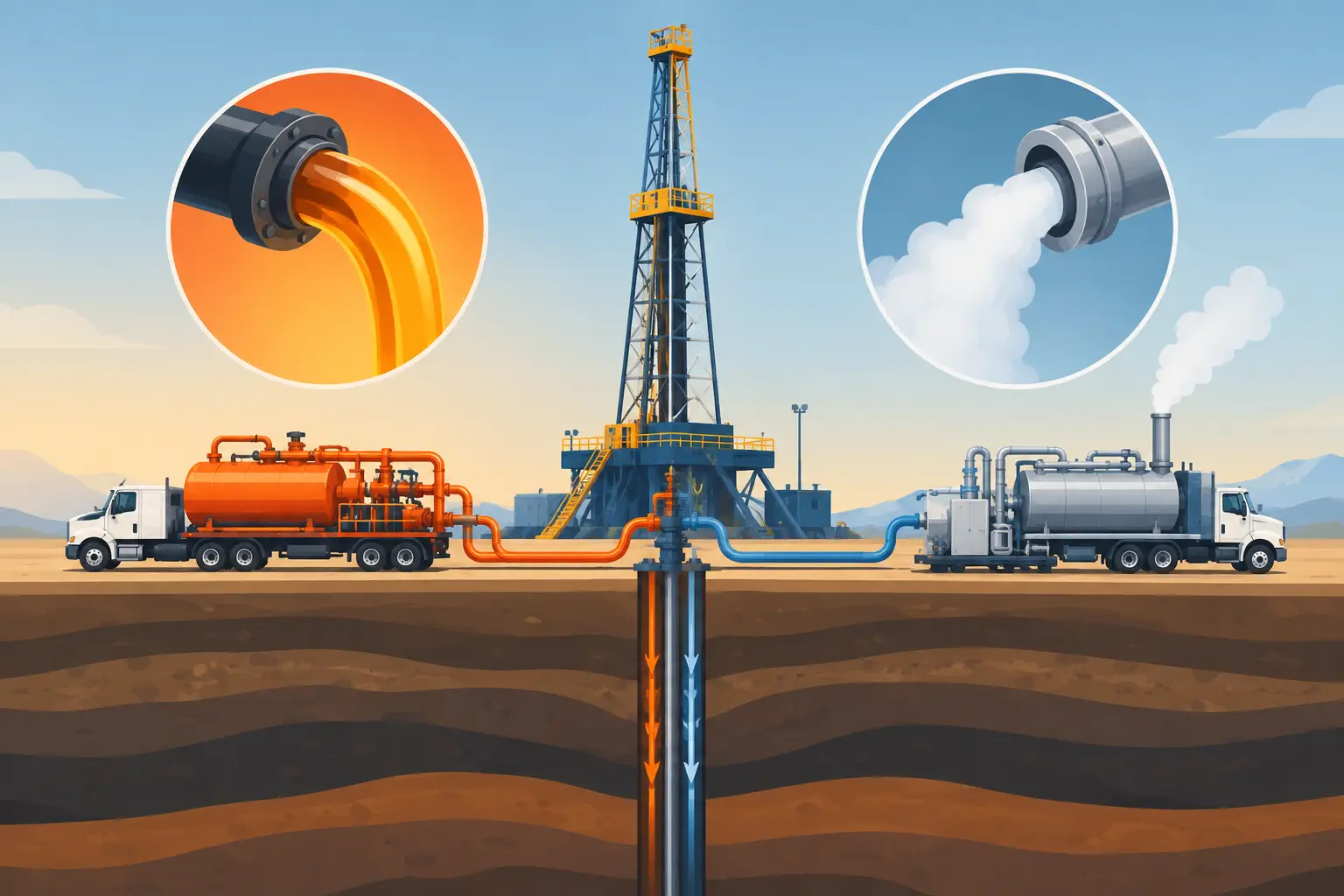
A plugged flowline, waxed-up valve, contaminated tank, or equipment coated in crude does not call for a generic heat-and-cleaning response. Hot oil versus steaming is a field decision that affects production time, fluid handling, equipment condition, crew safety, and the number of trucks required on location. The right choice starts with the material being treated and the result the job needs to deliver.
Hot Oil Versus Steaming: Different Field Jobs
Hot oiling is a circulation and heat-transfer operation. A hot oiler heats produced fluid or other approved treatment fluid and pumps it through the target system. The objective is typically to melt or soften paraffin, reduce viscosity, restore flow, thaw frozen lines, or heat equipment and fluids that need to move through piping.
Steam cleaning is primarily a surface-cleaning operation. A steamer applies high-temperature steam to break down oil residue, grease, mud, wax buildup, and other deposits on external equipment and work areas. It is commonly used on tanks, production equipment, service rigs, tools, vehicles, and locations where visible contamination or oily residue must be removed.
Both services use heat. That does not make them interchangeable. One moves heated fluid through a system. The other applies steam to a surface. Treating an internal production restriction with a steamer will not produce the same result as circulating hot oil. Sending hot oil to a job that only requires external washing adds unnecessary fluid, containment, and handling considerations.
When Hot Oil Is the Better Call
Hot oiling is generally the field choice when the restriction is inside a flow path. In Central Ohio production operations, that may include paraffin buildup in flowlines, tubing, valves, wellhead connections, tank lines, or production equipment that has lost flow efficiency in cold conditions.
The work depends on controlled temperature, pump rate, pressure, fluid volume, and a clear understanding of where the circulated material will return. A hot-oil job is not simply a matter of applying maximum heat. Excessive temperature can affect seals, elastomers, coatings, and equipment ratings. Excessive pressure can create a larger problem than the deposit being addressed. The crew needs to match the treatment plan to the line size, route, condition, and pressure limits of the equipment.
Hot oil also becomes the practical option when heavy crude, waxy production, or cold fluids need to be mobilized for transfer. Heating can improve pumpability and reduce the time required to move fluid through a line or into a truck. That matters when a maintenance window is short and fluid handling must stay coordinated with workover, vacuum truck, or tank service activity.
A productive hot-oil operation requires more than a hot oiler at the gate. It requires access, hose routing, containment, return-fluid planning, communication with the operator, and an experienced crew that knows when the system is responding as expected and when it is not.
When Steam Cleaning Makes More Sense
Steaming is the better fit when the problem is on the outside of the equipment or within an accessible open surface. It is effective for removing oily film from tank exteriors, cleaning tools before inspection, washing down service equipment, clearing residue from work areas, and preparing components for maintenance.
Steam has an advantage where crews need cleaning action without introducing a significant volume of treatment fluid into a closed production system. The heat loosens hydrocarbons and grime, while the steam helps carry contaminants away from the surface. That can reduce manual scraping and shorten cleanup time around equipment that needs to be inspected, repaired, transported, or returned to service.
The limitation is straightforward: steam does not circulate through a restricted line like hot oil. It also cannot replace chemical treatment, mechanical cleaning, or vacuum recovery when the job requires those services. For heavy deposits inside a vessel or line, a steamer may support the preparation work, but it is rarely the entire answer.
Steam cleaning also needs disciplined runoff management. The wash water, oil residue, and loosened solids have to be controlled and recovered according to the site plan. On an active location, that often means coordinating the steamer with vacuum truck support rather than treating cleaning and fluid recovery as separate tasks.
Heat Transfer, Pressure, and Fluid Control
The main operational distinction in hot oil versus steaming comes down to how heat reaches the problem. Hot oil transfers heat from within the system as heated fluid circulates through pipe, valves, and equipment. It is selected for internal restrictions and fluid-mobility issues.
Steam transfers heat at the surface. It condenses against cooler equipment, releases heat quickly, and helps lift deposits from the exterior. That makes it well suited to cleaning, thawing accessible components, and preparing equipment for hands-on work.
Pressure matters in both cases, but for different reasons. A hot-oil operation must stay within the pressure tolerance of the target system while achieving enough circulation to move heat and treatment fluid. Steam work must manage hose handling, discharge direction, hot surfaces, and the potential for pressurized steam release around fittings or confined areas.
Neither service should be selected by asking which unit is available first. Availability matters, especially during a production upset, but the wrong equipment can turn a short service call into a longer outage. A clear field assessment usually saves more time than a rushed mobilization based on incomplete information.
Planning the Job Before the Unit Rolls
Operators get better results when the service request identifies the symptom, the equipment involved, and the desired outcome. “Line is plugged” is a starting point. The more useful callout includes line size, approximate run length, known fluid characteristics, operating pressure, location of the suspected restriction, access conditions, and whether return fluid can be received or recovered.
For a steam-cleaning request, crews need to know what is being cleaned, whether the equipment is isolated, where runoff can be contained, and whether vacuum support is needed. Tank cleaning, rig washdown, and equipment decontamination can each require different site preparation even when the same steamer is used.
A competent contractor will also look at what else is happening on location. If a workover rig is waiting on a clean wellhead area, if a vacuum truck is already scheduled for fluid recovery, or if hauling is required after equipment is cleaned, the work can be sequenced to reduce idle time. That is where integrated field support has real value: less handoff between vendors and fewer gaps between the task and the next task.
Safety and Equipment Protection Are Part of the Decision
Hot oil and steam both create burn hazards, hot surfaces, hose hazards, and changing conditions around pressurized equipment. The practical controls are familiar to experienced field crews: verify isolation, inspect hoses and connections, establish exclusion areas, maintain communication, use appropriate PPE, and keep the job within the operating limits of the equipment.
The less obvious risk is equipment damage caused by applying heat where it does not belong. Some components cannot tolerate aggressive temperature changes. Some deposits respond better to controlled circulation than direct steam. Some jobs require cleaning before disassembly, while others require disassembly before cleaning. The work plan should account for the equipment manufacturer’s limits, the condition of the asset, and the consequence of a failed seal or connection.
Environmental control also belongs in the plan. A hot-oil job may generate returned fluids that need containment and recovery. A steaming job may create oily wash water and solids that cannot be allowed to migrate across the pad or into drainage areas. Vacuum trucks, containment, and disposal planning should be ready before heat is applied.
Choosing the Right Support Package
The best answer is sometimes both services, performed in the right order. Steam can clean external equipment and prepare a work area for inspection. Hot oil can then address an internal paraffin or viscosity issue. Vacuum truck support can recover fluids and wash water. Excavation or site work may be needed if access, drainage, or equipment placement is limiting the job.
Darby Energy approaches these calls as operating problems, not isolated equipment rentals. A hot oiler, steamer, 90-110bbl vacuum truck, service rig, hauling unit, and field crew can be scheduled around the actual scope instead of forcing the location to coordinate multiple contractors under pressure.
When production is restricted, equipment is fouled, or a maintenance window is closing, start with the condition in front of you. Identify whether the deposit is internal or external, whether fluid must circulate or surfaces must be cleaned, and how recovered material will be handled. That decision puts the right unit on the road and gives the crew a workable path to get the location back in shape.
Leave a Reply