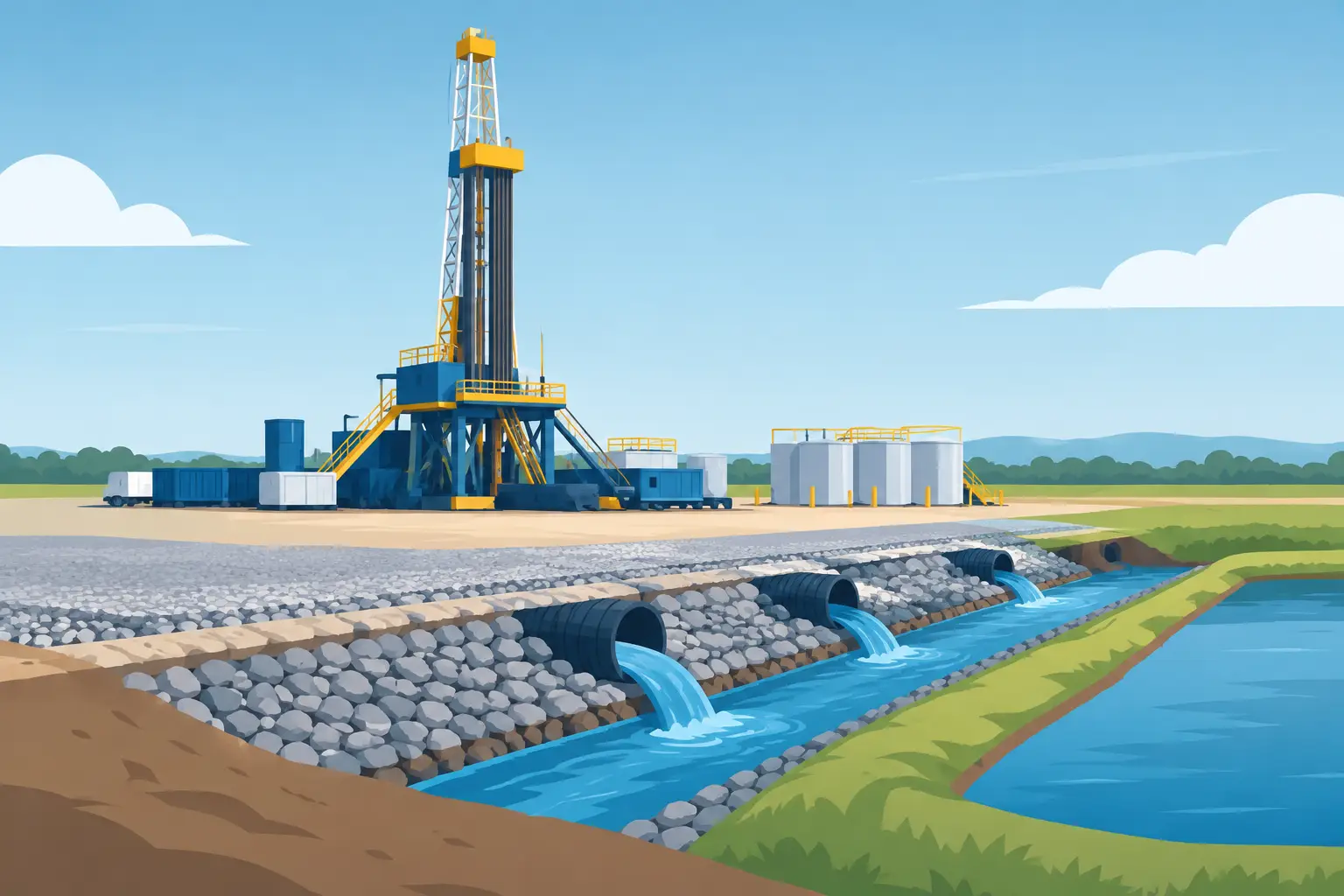
Water will find the low side of a location, usually when a rig is moving in, a vacuum truck is backing to a tank, or the forecast turns ugly halfway through a workover. Wellsite drainage requirements are not paperwork to settle after construction. They determine whether the pad stays accessible, whether sediment leaves the intended limits, and whether daily operations can continue without soft ground, standing water, or damaged access.
For operators and field supervisors, the practical standard is simple: keep clean runoff moving around the work area, control water that contacts disturbed ground or operations, and maintain stable surfaces under the loads the site will actually carry. The details depend on the lease layout, topography, soil, drainage area, phase of work, permit conditions, and the equipment scheduled for the location.
Wellsite Drainage Requirements Start With the Pad
A drainage plan starts before aggregate is placed. The excavation crew needs to read the natural fall of the ground, identify existing swales and low points, and establish where runoff can leave the site without cutting across the pad or access road. A flat-looking location can still collect enough water to soften subgrade and rut under loaded haul trucks.
Pad grade should shed water deliberately. That does not mean creating a steep surface that complicates rig setup, tank placement, or safe vehicle movement. It means maintaining enough fall to prevent ponding while keeping the working area stable and functional. The right grade is a field decision supported by survey information, equipment loads, soil conditions, and the operator’s site plan.
Access roads need the same attention. Water trapped in wheel paths will break down stone, pump fines into the base, and create a recurring maintenance problem. Crowning, side ditches, ditch relief, and properly designed culverts all have a role, but none of them work if drainage outlets are blocked or discharge points erode after the first heavy rain.
Separate Clean Water From the Work Area
The most effective drainage is often interception. Upgradient runoff should be diverted around the disturbed pad where site conditions allow. A diversion berm, swale, or ditch can keep a large volume of clean water from crossing the location and becoming a sediment-control issue.
That separation matters during completions and workover activity. A wellsite has active travel lanes, service equipment, fluid-handling areas, and temporary staging needs. Routing runoff through those areas increases the chance of washouts, standing water, and contact with materials that should remain contained. Keep outside water outside whenever practical.
Down-gradient controls must then manage runoff leaving disturbed areas. Depending on the approved plan and the site, that may involve stabilized outlets, sediment basins or traps, check structures, filter controls, erosion-control matting, or vegetated areas. There is no universal device that fits every pad. The control has to match drainage area, slope, expected flow, soil type, and available discharge path.
Design for the Equipment That Will Use the Site
A drainage layout that works for initial construction can fail once service equipment arrives. Completion support, workover rigs, vacuum trucks, winch trucks, water hauling, and heavy loads place different demands on the pad and entrance. Drainage structures cannot be installed where they interfere with turning radius, outrigger placement, hose routing, or safe backing.
Culverts deserve particular attention. They need adequate cover, sound bedding, protected ends, and a size that accounts for the drainage they receive. An undersized pipe may pass ordinary runoff but plug with debris or overtop during a hard storm. A damaged or crushed pipe can undermine the road surface before the problem is visible from above.
Ditches also need enough capacity and stable side slopes. A ditch that is too shallow will overtop. One that is too steep or poorly protected can scour, carry sediment downstream, and create a repair cycle. Where traffic crosses a ditch, the crossing must carry anticipated wheel loads without restricting flow or creating a sharp grade break for trucks.
At the pad edge, protect the transition between aggregate and native ground. Water moving under the stone section can weaken the base and cause edge failure. In soft or wet conditions, geotextile separation, additional stone, improved subgrade, or a revised drainage route may be required. Adding more surface stone without correcting the water path is often an expensive short-term fix.
Erosion and Sediment Controls Need Field Maintenance
Drainage controls are only effective when they remain installed and functional. Sediment accumulates, ditch checks shift, inlet protection plugs, and temporary berms get cut by traffic. A site can meet the plan on day one and still create exposure if controls are not inspected after weather events and during active construction.
The inspection frequency and documentation requirements come from applicable permits, the stormwater pollution prevention plan, and site-specific approvals. Field crews should know who owns those checks, what conditions trigger corrective work, and how repairs are recorded. Do not assume a control is working because it is still in place.
Common field failures are usually visible early: water flowing across the pad, rills developing on a fill slope, muddy discharge from an outlet, ponding near tanks, or a road ditch carrying more flow than intended. Addressing these conditions immediately is less costly than rebuilding a washed-out entrance after equipment has been scheduled.
Temporary controls also need to evolve with the job. The drainage approach during pad construction may not be the right approach during drilling, completion, or long-term production. As disturbance is stabilized, temporary measures may be removed or replaced under the approved plan. As operations expand, the site may need additional containment, improved road drainage, or regrading around new equipment.
Containment Is Not a Substitute for Drainage
Containment and drainage work together, but they solve different problems. Secondary containment is intended to manage fluids associated with operations. Site drainage manages stormwater and protects the working surface, road, and surrounding ground. Treating a containment area as a general drainage basin can reduce its available capacity and complicate fluid management.
Tank batteries, loadout areas, and service zones should be planned so normal runoff does not enter containment unnecessarily. Conversely, any water accumulated inside containment requires site-specific evaluation before it is moved. Its handling depends on what may have contacted it, applicable operating procedures, and regulatory requirements.
During workovers and fluid-handling jobs, temporary hoses, pumps, and vacuum truck activity can alter normal water paths. Crews should watch for low spots created by temporary equipment or berm changes. A small diversion blocked by a hose ramp or stockpiled material can push runoff directly into a travel lane or containment area.
Build Maintenance Into the Job Plan
The best drainage plan includes the work needed to keep it working. Before mobilization, confirm that ditches are open, culverts are clear, outlets are stable, and the entrance can carry scheduled traffic. During the job, keep spoil, stone piles, and equipment out of drainage paths. After heavy rain, inspect the access, pad perimeter, and discharge points before bringing in critical loads.
For Central Ohio locations, freeze-thaw cycles add another operating variable. Frozen ground can shed water quickly, while thawed subgrade can lose strength in a matter of days. Spring conditions may require more frequent road maintenance, additional stone, cleaned ditches, or revised traffic patterns to keep the location serviceable.
Drainage should be treated as part of site readiness, not a separate civil item that ends when construction equipment leaves. A well-built pad, stable access, and maintained runoff controls protect the schedule for every crew that follows. Before the next rig, truck, or tank moves to location, make sure the water has a defined place to go.
Leave a Reply